There and Back Again - Surviving a Stroke During the Pandemic

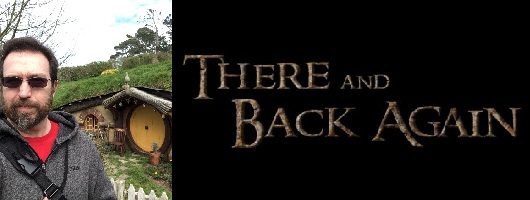
Let me begin with a quote,
“It's a dangerous business, Frodo, going out your door. You step onto the road, and if you don't keep your feet, there's no knowing where you might be swept off to.” J.R.R. Tolkien, The Lord of the Rings.
On the Friday just prior to the COVID lockdown that occurred in July 2021 (Vic), what was initially thought of as a migraine at lunch time and not a side effect of the AZ vaccine, turned out to be something worse, far worse than any of us expected.
After a trip via ambulance to a local hospital (Angliss), I underwent a MRI just before 8pm that evening. The MRI revealed a major bleed (ICH) and swelling of the brain, essentially a haemorrhagic stroke that resulted from an AVM (dAVF).
All I know is that a very quick ambulance ride to St Vincent's hospital followed, which is about 40 km and during that trip, I had a doctor in attendance (which a retired nurse told me is very rare). Ironically, due to covid, the streets were very quiet which probably helped save my life.
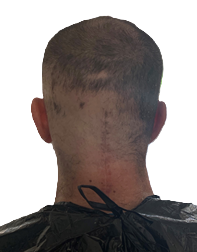
At St Vincent's hospital, I underwent multiple surgeries over about 3 days, one of which being the permanent removal of a piece of my skull. During that time, I developed an infection and was placed on a ventilator with a tracheostomy. So yes, someone literally slit my throat, and yes, I was fortunate to have a ventilator given the need for those with severe covid. Add to that - multiple tubes, connections, injections, having a wire travel the length of your body multiple times (angiograms) and the sweet dulcet tones of the MRI machine.
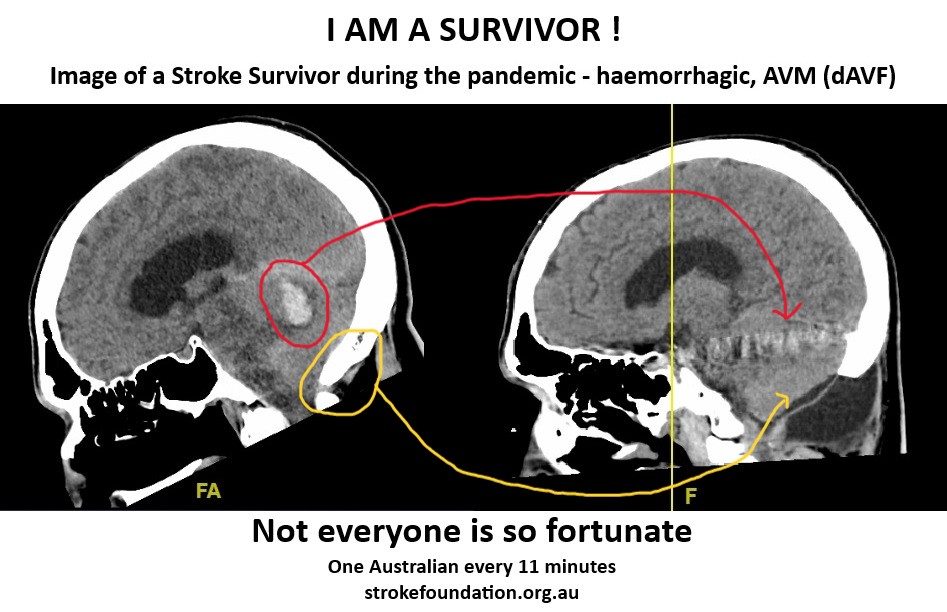
Overall, I spent about a fortnight in a coma, which was how I spent lockdown five.
Due to the restrictions on visitors that were in place at the time, I only saw my wife once in-person (a special exception was made, she had about 15 minutes) and could not see my children in-person at all during my hospital stay.
My wife was initially told that if she and the kids were asked to come see me, it would be for end-of-life, highlighting how traumatic events such as these can be on loved ones. Not being asked to come in was good sign.
Since I am writing this story, you can guess some of how the next part went. I recovered, but along the way I had to learn to walk again and due to the tracheostomy, talk. Waking up from a fortnight long coma is a surreal experience as there are levels of consciousness and awareness that can only be expressed by using the analogy of a computer (PC). My brain had literally displayed the good old blue screen of "you know what" and shut down. I was in reboot, having to reinstall the operating system then find all those old programs and data connections that were previously installed. Thank you, neuroplasticity.
Showing a level of determination worthy of the Dylan Thomas poem, "Do not go gentle into that good night", I raged against the dying of the light and worked hard. I can distinctly remember telling my physio, "I am here to work and get better, don't take it easy on me." Learning to walk is easier the second time around, as the knack (as given by Douglas Adams) lies in learning how to throw yourself at the ground and miss. One foot in front of the other - easy. Learning to balance - now that is hard.
Overall, I persevered and recovered enough to be sent home after 32 days in hospital. 3 months later, I had made a partial return to work and was working full-time early the next year. For the second anniversary of my stroke, I did 5.2 km at Run Melbourne with a reasonable time of 37:32. Recently, I completed my 100th parkrun (5 km) post stroke.
From what I understand, I am one of the fortunate ones to have successfully recovered to the extent that I have.
Happily, I can report that my journey continues and like all experiences of life, it has its ups and downs, slow times and fast times. I can say that I do not yet know where I might be swept off to next, but I do know that I have come to a fork in the road.
For my part, I have decided to set off on the road less travelled, the road where I can now open up and share my experience with the broader community. In my own way, by telling my story I hope to advocate for those less fortunate than myself and encourage a greater understanding of stroke.
Surviving a stroke during the pandemic is now my superpower, and with great power comes great responsibility.
Someone in Australia suffers a stroke every 11 minutes. A stroke does not discriminate, it can occur to anyone of any age. Know the signs, look at the info on strokefoundation.org.au and know that a "Thunderclap" headache is something not to be ignored.
A stroke is a crucible, it will test your mettle to the fullest. Be the blade strengthened by the fire, and do not yield to the dying of the light.
Persistence over perfection.
"Little by Little, One Travels Far." J.R.R. Tolkien, The Lord of the Rings
#fightstroke #strokefoundation #teamstroke
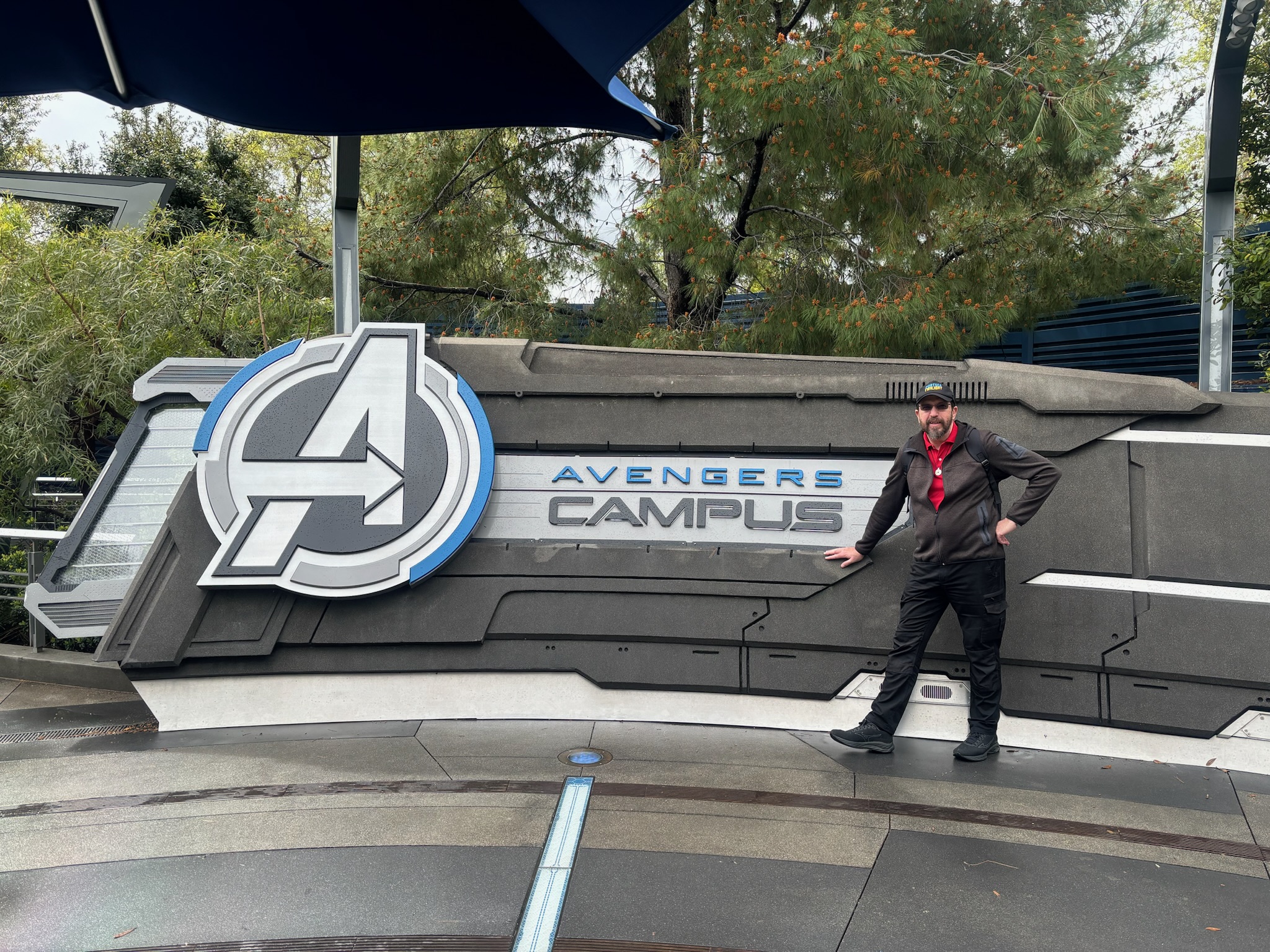
And to all my fellow survivors, stand tall and strike a superhero pose then say to yourself "I survived a stroke! What is fear to those of us who have overcome what we have experienced!"
Have the serenity to accept the things you cannot change, change the things you can, and the wisdom to know the difference".
As the wheel turns full circle and I find myself back again, I shall finish as I started with a quote (or two):
"Don't adventures ever have an end? I suppose not. Someone else always has to carry on the story." J.R.R. Tolkien, The Lord of the Rings
"The world Is not in your Books and Maps (or Facebook or Digital Device), It is out there." J.R.R. Tolkien, The Lord of the Rings (with my annotations)
Best wishes,
Damian
Acronyms (for the technical minded and those who want to know) Stroke Foundation and Mayo Clinic.
Intracerebral haemorrhage (ICH) is when an artery inside the brain bursts and bleeds into the brain itself. ICH accounts for 11% to 22% of incident strokes and half of all stroke deaths (Feigin et al. 2009 [198]).
An arteriovenous malformation (AVM) is an abnormal tangled connection between arteries and veins.
Dural arteriovenous fistulas (dAVFs) are irregular connections between arteries and veins. They occur in the tough covering over the brain or spinal cord, known as the dura mater. The irregular passageways between arteries and veins are called arteriovenous fistulas, which can lead to bleeding in the brain or other serious symptoms. Dural AVFs are rare and not typically genetic.
----------------
Dedication.
This story is dedicated to Mr. Christopher Thien, Mr. Carlos Chung and Dr. Cybele Tran, without whose expertise, experience and dedication, I wouldn't be here today to tell my story. As no person is an island, I wish to extend my dedication to all those unnamed individuals and organisations that contributed, whether they be medical, support, security or administration. Thank you.
I also wish to add a special mention to my wife and children, who had the far more difficult time through the ordeal, than I did. Their love and dedication provided a beacon that motivated and inspired me to work hard, and to make my way back again.