Some more questions I have been asked.....

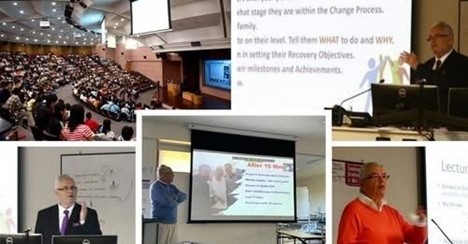
Thrill Seekers and Fellow Time Travellers, as many of you know, I’ve been speaking with Final-Year physio students since 2016.
Since that time, I estimated I've spoken with over 2600 final year Physio students at the Australian Catholic University \{ North Sydney, Ballarat, and Brisbane campuses\}, and Newcastle University.
My normal practice has been after delivering my lecture, we spend what is the most enjoyable part of my lecture - answering questions from the students.I’ve previously shared several blog posts featuring questions I’ve been asked, along with my responses
During this quiet period between the New Year break and diving back into the serious work on Stroke in February 2026, I thought I’d publish a further set of questions I’ve received, along with my answers.
As you may recall my lectures have focused on my stroke; my life before and after it; my rehab philosophy, and my recovery journey since April 2016.along with the insights and lessons I’ve gained during the day since my "episode"
I also discuss the insights and lessons I’ve gained from this life-changing experience,so Gang, let us get the Q&A Show on the road..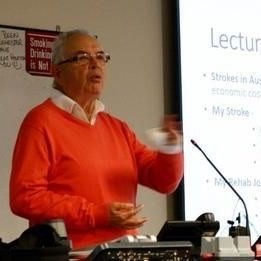
Why do you talk to students/clinicians about your stroke?
I talk to students and clinicians about my stroke because, as a survivor, I’m the only one who can share what led up to it, how I felt during it, and my thoughts and insights from my rehab journey. In short, I share my Lived Experience.
Why should I work as a clinician with stroke survivors?
When I'm asked this question by my audiences, I supply three reasons.
Number one is that - No two strokes are ever the same.
What an incredible challenge clinicians face in their daily work—every stroke survivor they speak to or treat presents with unique and often significant deficiencies.
Imagine how that impacts their[ the clinicians'\} rehabilitation vocabulary and the range of skills they need.
The second reason is that - You have the opportunity to come into people’s lives [both the stroke survivor and their families] and through your skill change their lives permanently.
The third reason is that - You get to meet an extraordinary group of people.
Stroke survivors are individuals who have faced significant challenges but refuse to let them define their lives. Many are determined to take on rehabilitation, working hard to regain as much of their pre-stroke abilities as possible.And you as a Stroke clinician will have a key role in that!
What's the benefit of having a stroke rehab plan?
The benefit of having a plan is that it helps you get organized and gives you an objective, an end goal, or a target. Once you have a realistic goal, you can map out your rehab journey, breaking it down into the steps needed to reach it, whether that means walking again or using your arm or hand.
A rehab plan with quantifiable objectives will enable you to assess your progress-which will help you maintain your motivation to keep going. Nothing like progress for maintaining motivation levels!
Do you think you will ever plateau with your rehab?
No, I've often heard this term ‘plateau’ when it referring to a rehab plan as if there is a place/condition that when you reach you become satisfied with the status quo of your life post stroke.
My ambition is to keep going for as long as I can.
I am bloody well determined to keep improving to reach the maximum of my abilities. The secret to my rehab plan for six years post is that I've now integrated my rehab into my daily life.
How long will your rehab last?
To be honest, I see myself doing my rehab activities well into the future. In my mind stroke rehab is perpetual, unlike other medical episodes which have ‘sunset clauses’. Injuries like a dislocated limb, torn muscle or a damaged hamstring have a finite time frame- this does not apply to stroke deficiencies. I still exercise to ensure my leg and brain are communicating at maximum potential. Or my grip of my right hand is maintained.
For example, it was over three years before I could tie shoelaces; five years before I could use a knife in my damaged right hand to cut my well-cooked scotch fillet, and five years before I was confident enough to shake hands with my right hand.These are the time frames I am looking at.
How do you stay motivated?
How do I stay motivated? Easy, to be to be blunt I'm your classic type A personality!! I was determined once having commenced my rehab and I had a plan with very specific objectives.
The primary objective was being able to walk again, and I would walk out of the rehab gym at Bankstown hospital on discharge day in August 2016 - which I did!
This was after being told by one of the doctors that was it highly unlikely that I'd walk again.
With my plan I had specific review points so I could track my progress. I could highlight my improvements and that is the key factor in staying motivated- if you are progressing that is very motivating
Six years on do you still do rehab; how do you undertake it?
Six years after my stroke, I’ve made my rehab part of my daily routine. For example, hanging the washing on the line doubles as my reaching exercises, and emptying or filling the dishwasher works as both reaching and hand exercises. I also make sure to walk 12 to 15 kilometers every day.
Did you suffer any depression or grief because of your stroke?
In fact, my work in Change Management in the corporate world helped me to accept very quickly what had happened to me At no stage during my rehab or since my stroke did I suffer depression, feel sorry for myself, or be upset about the fact that I had had a stroke
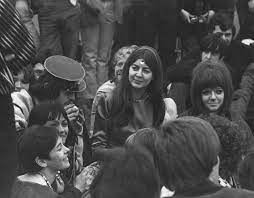
Did you have any remorse about your life prestroke, did you regret the things that you did which caused you to have a stroke? Looking at my pre-stroke life I can certainly say that I had led a fully interesting life. I was a true child of the 60s.
Later in my corporate life I displayed all the symptoms and behaviors of a committed workaholic - three to four hours sleep at night, working 60 to 80 hours a week, shocking diet, no exercise etc.
Do I regret my life before the stroke? Not for ONE MOMENT!.
There's no point but what I do now in my life post stroke is the best it can be, so that I can avoid subsequent episodes of this nature.

How did your family and friends react to your stroke?
My family were incredibly supportive during the entire process, and they now ensure that I maintain my rehab activities poststroke -in fact they are tougher on me than any clinician in Bankstown hospital!
In terms of my friends, that's an interesting comment. I posted on several websites that I would be absent because of what had happened. As a result, I had received more than 800 emails from all around the world from business acquaintances and friends to which I can proudly say I've answered everyone.
But there were several friends who sadly were silent, which was disappointing and now off the Brian A Beh Digital Christmas card list.
On the plus side I reconnected with workmates, schoolmates whom I've had not heard from for over 40 years plus I had incredible support from two special gentlemen friends from Melbourne.
Thrill Seekers and Fellow Time Travellers -I hope you found this blog interesting.
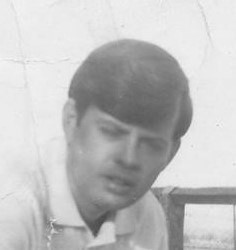
Brian A Beh - A Stroke Survivor.Circa 1969