What’s in a Word? By Claire Hanney

“Vocabulary enables us to interpret and to express. If you have a limited vocabulary, you will have a limited vision and a limited future”. – Jim Rohn
Imagine waking up and finding that you can’t utter one word. You can’t say “thanks” or ask for a glass of water or say “I love you”. You can’t say what you would like to eat or wear, or what you want to do. You can’t express your feelings of anger, sadness or happiness. You can’t talk about a beautiful sunset or hearing the dawn chorus.
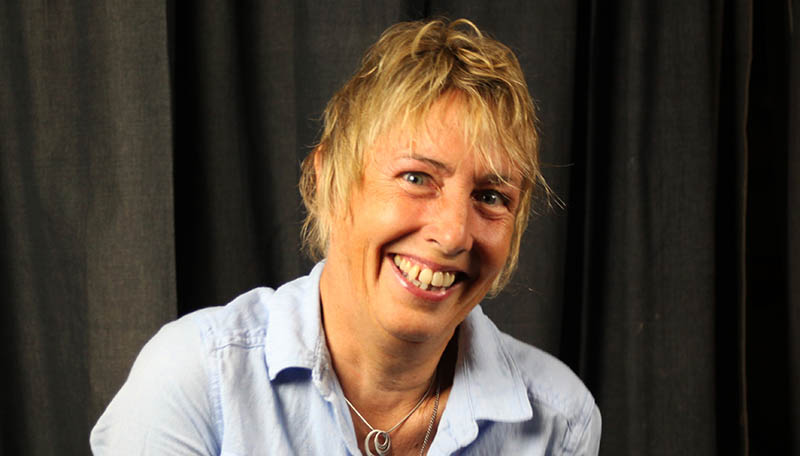
That was me 11 years ago. In a flash everything in my world had changed. At age 48 I’d had a stroke and was left with no feeling or movement in my right side; and I had lost the ability to speak.
I had always played active sports, with my fair share of injuries. So I wasn’t daunted by the lack of feeling and movement: exercises, practice and time would see me right. However, relearning to talk was another matter.
At first I had no verbal communication at all. Then a few weeks after the stroke I managed to say “hello”. I was fortunate to be starting to speak again, but there were difficulties. Finding the word I wanted to say in my memory was challenging enough, but working out how to pronounce it even more testing. I needed to spell it, but couldn’t spell it without saying it. When I did manage to speak the words, the ones in my head were often different from those I was verbalising. I couldn’t trust what I was saying.
I made good progress to begin with, as I had no fear. I just wanted to communicate with others. Before long I could get by, despite some mistakes. I’d often substitute “she” for “he” or vice versa; and dates, numbers, and months really caught me out. Funnily enough, I could read a book in my head but couldn’t read it out loud.
After a while, though, I became self-conscious of my mistakes. If I used any new or different words, my pauses and mispronunciations made conversations stilted. I couldn’t interject, because by the time I had worked out what words to use the conversation had moved on. I retreated, speaking less and less until I felt like a mouse in the corner with nothing to say. As my confidence diminished, my life became smaller and smaller until I felt as if I was locked in a world of my own. Nothing was tremendous, amazing, or fantastic let alone awesome or exciting. At best it was just “good”. It was always “good”, because people don’t want to be around you if it’s bad. I had lost all my confidence and enthusiasm, and no-one knew how I felt.
Something needed to change, and I realised I had to move out of my comfort zone. This meant being vulnerable and embarrassed, as well as being afraid and scared of what people might think, say or do. I practised on family becoming adept at laughing at my mistakes. I continued to push the boundaries, my vocabulary increased, whereby films became entertaining or funny, sad or harrowing, not just “good”. I found that increasing my vocabulary improved my imagination, my thinking and how I felt. This in turn changed and expanded my world and ultimately how I lived. The words I attached to my experiences became my experience.
The negative monkey chatter in my head had been getting in the way of my recovery. Words have an energy associated with them, and I became aware that I had been overusing words such as “should”, “try”, and “hard”. “Should”, I realised has the energy of guilt; using words like could, would or choose proffered me possibilities. It’s better to use a definite “will” or “won’t”. You don’t just try to do something: you with do it or you don’t. “Hard” is immovable, like concrete; I prefer the word “challenging”, as this suggests the chance of achieving something. Using more positive words empowered me to move forward in my life. A new world began to open up.
My speech is mostly automatic now, although I still have moments when I have to pause and search for words, or ponder how to pronounce them. Dates, numbers still baffle me when I’m tired. I have come to terms with the fact that I may at times say something different from what I believe I am saying, and if this happens I apologise and move on. Best of all, I have gained the confidence to speak in public, which I regard as a huge achievement for someone who once would rather be dead than speak the eulogy.
Related resources:
More resources
More blogs by Claire: