The Legal Side of Things

How often do we humans take time to look beyond the present and glimpse into the land of tomorrow - our future?
Whilst we are young, or well, or still able to get around and ‘strut our stuff’, we think we are indestructible. We go through our days oblivious of all the things that can – and sometimes do – go wrong: never taking into consideration the consequences. We have a tendency to put things out of our mind and bury our head in the sand when it comes to legal affairs; perhaps because we consider them distasteful to think about or discuss; or the timing is ‘not quite right’.
During my working life, I often heard young people say they didn’t need to look at the legal side of their life – Wills, Power of Attorney or Power of Guardianship. I kept hearing, ‘It is only the elderly who need to concern themselves with those things’. But is that so? Terrible things can happen at any age. A young person can become medically or mentally unwell, or meet with a terrible accident, with the result they are legally incapacitated and unable to appoint someone of their choosing to look after them or operate their affairs as their legal proxy.
Although Clive and I had the forethought to make our Wills, we had neglected to put in place: Power of Attorney and Power of Guardianship. We thought making our Wills was what was needed for the time being; neither of us took time to glimpse into the world of tomorrow.
I have no qualms speaking about Clive’s issue. When Clive experienced his stroke and as a result of the legacies of his stroke, he was unable independently to undertake or attend to his legal and financial duties; this placed me in a predicament; as he couldn’t manage his affairs. He couldn’t read or write; therefore, he couldn’t understand written documentation. This dilemma impacted greatly on the already long list of legacies we had to contend with as a result of Clive’s stroke. Everything we had was in joint names: our circumstances had drastically changed. We had neglected to assigning Power of Attorney, which would permit me to run our financial affairs on Clive’s behalf; Power of Guardianship, which would enable me to ensure that Clive was adequately protected and the correct medical decisions were made on his behalf and Anticipatory Direction, which would also ensure that Clive’s personal wishes, which he had made me promise many years before to honour, would in fact be adhered to.
When Clive was still at Hampstead Rehabilitation Centre, arrangements were made for a Power of Attorney to be drawn up to give me the sole right to operate and run our financial affairs. The lawyer came to the centre and, with the medical doctor acting as witness, explained the document to Clive. He then asked him whether he understood the need for it to be drawn up and put in place. Although at that stage Clive couldn’t speak, read or write, he nodded that he understood the circumstances surrounding the document. He signed the document to the best of his ability, and it was then signed by the other parties and legally witnessed. This enabled the financial side of our affairs to fall in place.
Although I was relieved to know that I was ‘solely’ able to conduct our financial affairs, I felt tremendous guilt having to go down this path. I felt I was stripping away yet another of Clive’s rights. Prior to his stroke his life was under his control, now, as a direct consequence of his stroke, his life was out of his control; he was completely reliant on others; especially me, his wife/carer/advocate.
We who travel along this path hear terrible, heart-breaking stories of deceptive people who have sinister intent and do not have a conscience when deceiving those who, through no fault of their own, are placed in this position. Clive and I trusted each other; he knew I would be honest, he knew I would do the right thing and have our best interests at heart. Clive was always included in decision-making when we needed to purchase anything of significance post stroke: it was important for his self-esteem, self-worth and morale. Just because he’d had a stroke and couldn’t read or write, it didn’t mean he was invisible: he was still an integral member of our family. He could still give his nod of approval or shake his head in disapproval.
As the years progressed it was time for Clive and me to review our legal documents. We engaged a lawyer who kindly came to the house; we updated our Wills and put in place Power of Guardianship. We felt protected for that next phase of our journey. Clive and I were already registered as organ donors and held the view that medical science is constantly making wonderful progress; if we had something we can no longer use and someone is in dire need of it, why not give them a second chance at life?
In later years, Clive and I went one step further and organised a Living Will, or Future Directive (Anticipatory Direction), which set out our wishes should our health status deteriorate to the extent that decisions would have to be made on our behalf. This document exempted our girls from having to second-guess our wishes, and struggle to make painful, soul-searching decisions on our behalf should it become necessary. We stored a signed copy with our legal documents and gave additional copies to the medical professionals we had assigned to monitor our health and well-being. The girls wouldn’t have to make that decision, it had already been made: it was final and it was what Clive and I wanted.
When engaging the services of a Financial Advisor, one of the first questions asked was ‘Do you have a Will, Power of Attorney and Power of Guardianship put in place? Hospitals ask the same question, which now includes the Anticipatory Direction.
It really makes sense to explore these legal avenues whilst you are well and have the mental capacity to make known who you would like to manage your affairs and to ensure that your wishes are carried out as you intended. Keep in mind that once the person is deceased, the Power of Attorney and Power of Guardianship will cease. The executor named in the Will is tasked with carrying out the final phase of implementing the person’s wishes. I cannot emphasise enough the importance of putting these documents in place. Without them, if unforeseen events occur, a messy, legal minefield can result, which can be very expensive to put right.
Don’t make the mistake of thinking that you’re too young or too busy, or that you will do it tomorrow – tomorrow may not turn out according to your plans. We can’t foresee our future. Don’t leave everything until it is too late.
Due to continual changes in the legal system, updated advice should be sought from your lawyer, or you could contact The Office of the Public Advocate in the state in which you reside. For people residing in South Australia www.opa.sa.gov.au
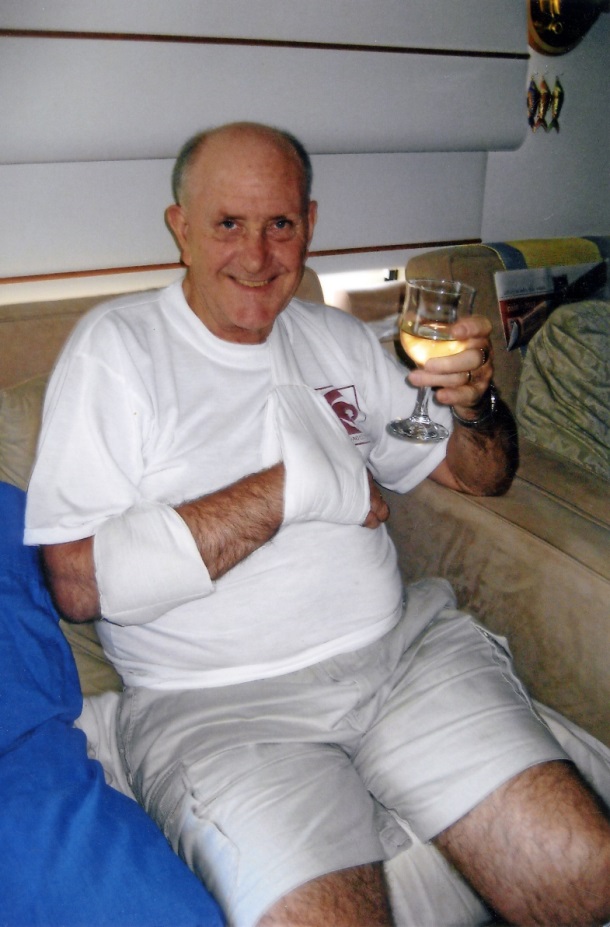
Cheers! Clive – happy hour (2007)
© Carol Rosemary Fuller
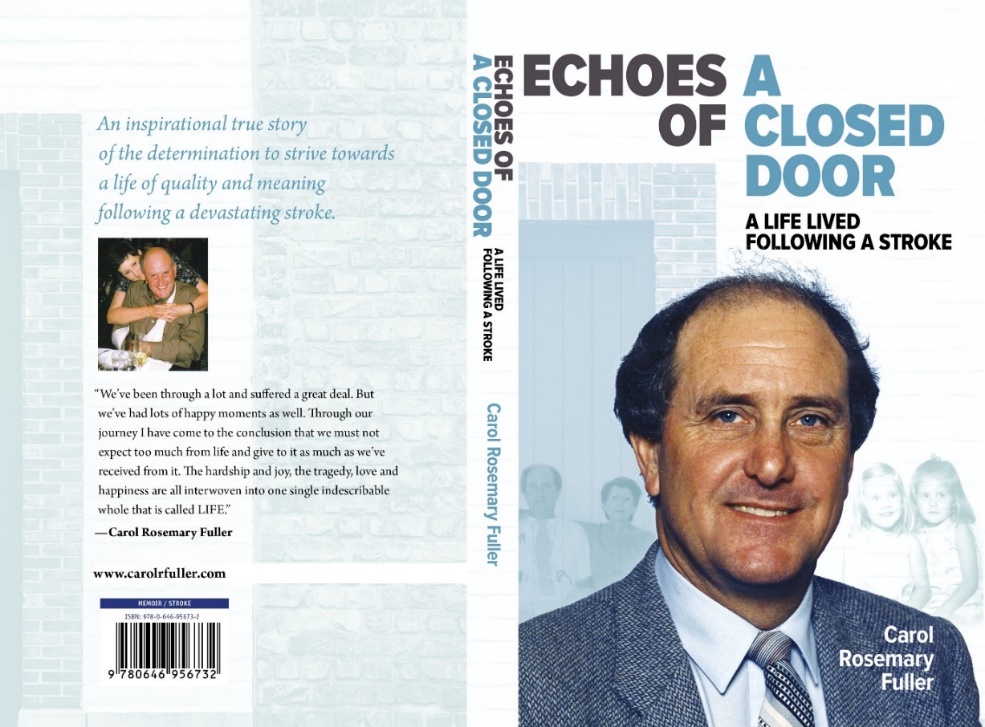
Author: Echoes of a Closed Door – A Life Lived Following a Stroke