From Lived Experience to Evidence"-My Day at the George Institute for Global Health, Uni of NSW, Sydney.

Brian A. Behon July 07, 2026
0 Comments Last Wednesday, 1 July, I attended an all‑day, face‑to‑face gathering "From Lived Experience to Evidence" at The George Institute for Global Health, held at their impressive new headquarters at the University of NSW in Kensington,
As the Inaugural Chair of the Institute’s Consumer and Community Advisory Group — a role I relinquished in 2024 — and now an active member of the Brain Health Group and several other programs, it felt both familiar and energising to be back in that environment.
As always, the day moved seamlessly from lived experience to evidence — a hallmark of the Institute’s approach and one of the reasons I remain so committed to its mission.
Having attended many of these events over the years, I arrived confident that the agenda would deliver substance. It did. The programme was packed with presentations that were thoughtful, well‑constructed, and closely aligned with the Institute’s strategic objectives.
The highlight of the morning was the Concurrent Poster Sessions. Around fifty attendees had the opportunity to speak directly with researchers leading the Renal and Metabolic programmes, Cardiovascular initiatives, Brain Health work, MSK research, and Women’s Health studies.
It was a rich and energising session — the kind where you leave genuinely excited by the depth of information and the calibre of the people driving the research. One of the Posters is the subject of my blog,Researchers at The George Institute for Global Health are seeking stroke survivors, carers, and other members of the community to assist in developing an innovative new treatment for Stroke.
This was followed by a presentation from Ruth Peters on the Integrity Project — rigorous, insightful, and deeply relevant to the future of consumer‑centred research.
After lunch came one of the standout moments of the day: reflections from the Guunu maana \{heal\} project. This First Peoples community engagement initiative, presented by Jacet Anderst and Liz Bourke, is a revolutionary and innovative strategy for guiding co‑design with First Peoples.
The level of cultural respect, methodological clarity, and strategic depth was exemplary, and it set a high bar for the remainder of the afternoon.
Two concurrent sessions followed. I attended Baldeep Kaur’s session on Consumer Good Clinical Practice — highly worthwhile and directly relevant to our ongoing work across multiple programs.
In my view, The George Institute and the organisers delivered a superb, information‑rich day. As an Honorary Consumer Fellow, I felt proud to be part of it.
But my involvement with George did not end there.
The following day, I met again with colleagues as part of the Brain Health Group — another full, well‑structured programme that reinforced the momentum building across the Institute’s research landscape.
The face‑to‑face meetings also gave me the chance to spend time with my colleagues and friends at The George: Ruth Peters, Audrey Lee, Vicki Gregory, Caitlin Alsopp, Rose Wilson, and Associate Professor Cheryl Carcel.
It was a pleasure to reconnect in person rather than over Zoom.
We left feeling energised, informed, and reassured that our contributions — individually and collectively — are making a meaningful difference in the world of clinical research.
An insightful 2 days.
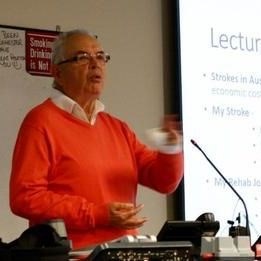
Brian A.Beh
A Stroke Survivor & Honorary Consumer Fellow
The George Institute for Global Health.