Interview with Dr Annie McCluskey

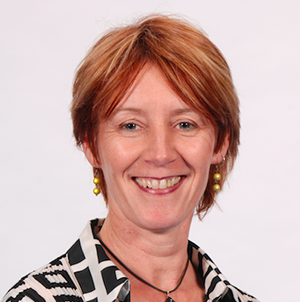
Many of you may be familiar with Occupational Therapist, health services educator and researcher Dr Annie McCluskey. Either through your own treatment, or seen Annie comment on forums and questions here in enableme.
Annie has provided private occupational therapy and stroke rehabilitation services for over 20 years, consultations and mentoring for graduates. She is also an honorary senior lecturer at the University of Sydney, and Adjunct Associate Professor at James Cook University, and Stroke Foundation Clinical Council.
We’ve asked Dr McClusky a few questions about why, and how she uses the site, and we thank her for the great advice and ongoing support that she offers survivors and their families in enableme.
How do you use enableme?
I tend to visit the site about once a month, to check who has been commenting on/ asking questions about a topic.
I look at topics that interest me and link to my areas of practice and research as an occupational therapist and health services researcher, such as arm and hand function, leg/mobility etc.
I also encourage students and clinicians that I work with to ask questions of the stroke community. For example, last year, two occupational therapy students were visiting a stroke survivor and his wife at home each week for eight-nine weeks, as part of a university elective where I teach. The students assisted this couple to set and work towards three rehabilitation goals as part of the elective unit, with my assistance and supervision.
The gentleman with whom they were working was considering having surgery to cut the long finger tendons of his affected non-functional hand, with the aim of reducing finger and wrist tightness, and improving hand hygiene.
We couldn't find any research on the outcomes of this procedure to share with him, so I suggested students post a question on enableme, seeking experiences of other stroke survivors to share with this man. Unfortunately, on that occasion, they got no responses but at least they tried. And as graduates, they will know about enableme.
Why do you use enableme?
I like to know what questions/issues stroke survivors are asking about, and the nature of responses that have been posted.
The site helps me to learn about what concerns stroke survivors, where and how they seek and use information from enableme.
If I disagree with a response, or think I can 'add value' by posting a response, I will do so. For example, I might know the current research (or lack of research) on a therapy, and take time to summarise what I know about that topic. Or I may know of someone - a stroke survivor or health professional who has used a therapy - and can relate their story/experience.
What are your personal rules around engaging with the community? I.e. engaging with survivors without knowing their full medical history.
I think it is generally better to offer some advice than none. I am less concerned about risk, since most advice I offer is not high-risk.
I think about whether the person asking a question may have had a mild stroke with minimal disabilities, and a 'good' recovery. Alternatively, they may have a significant ongoing disability.
Since I do not have that information, I usually offer advice that covers all bases. I make suggestions about what I consider to be best practice/ evidence informed therapies that they can use alone or with help from a therapist.
I consider whether they might be early or later post- stroke, want free/ low cost or private services, and if they live in an urban or rural location. Increasingly I am thinking about distance consults/ services as an option to help stroke survivor’s access expert advice, whether they live in a city or rural location.
In posting advice I try to remember that everyones circumstances are different and that many survivors will continue to consult with a health professional.
For more about Dr Annie McClusky:
Annie is an occupational therapist, a health services researcher and educator. She has 30+ years’ experience in stroke and brain injury rehabilitation, in Australia and the UK.
Annie has provided private occupational therapy and stroke rehabilitation services for over 20 years, consultations and mentoring for graduates. She is also an honorary senior lecturer at the University of Sydney, and Adjunct Associate Professor at James Cook University.
Research and publications: Annie has published over 50 peer reviewed journal articles, and been awarded over $3 million in competitive grant funding. Her research focusses on: translating evidence from journals into daily clinical practice particularly in stroke care; adult handwriting retraining; improving community participation and outdoor mobility.
Annie is co-developer of ‘OTseeker’, a free evidence database for occupational therapists