How the Victorian Government trivialised the trauma of my stroke experience

A subject not widely discussed or readily understood of relevance to stroke survivors is that of trivialising trauma.
From what I understand, Trivialising trauma involves downplaying, dismissing, or mischaracterising the severe impact of traumatic events, often by equating them with common unpleasant experiences or by using clinical terms like "triggered" or "trauma" to describe minor discomforts. This phenomenon, sometimes linked to "concept creep" where the definition of trauma expands to include everyday adversity, can erode empathy for survivors and invalidate their experiences.
One example, which I consider relevant in my case, is a professional failing to acknowledge the severity of a reported event, causing the survivor to feel invalid. When another factor such as an inequitable application of rules is included, it is no wonder that the barrier to seeking help becomes too high and mental health suffers.
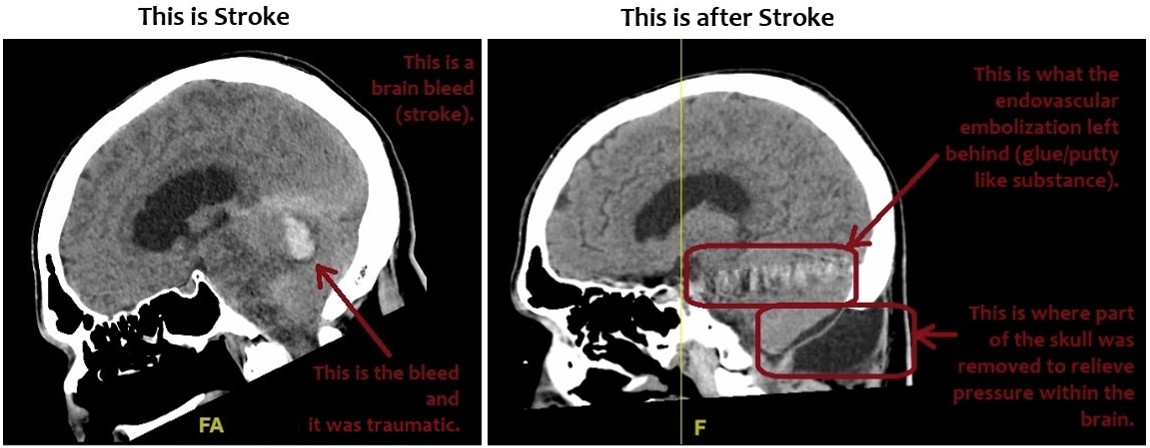
In a hopefully soon to be published article with the Stroke Foundation, I liken the experience of stroke to how do the blind experience the colour green? In the article, one of the themes that I explore is the idea that TBI (Traumatic Brain Injury) is a better fit for my experience than stroke. In some respects (and in my opinion), the term stroke has lost some of the trauma associated with the experience. This is understandable as identification and improved treatment options have changed the outcome for many ischemic stroke sufferers.
In my case, I have the scars to remind me every day of the trauma associated with my rite-of-passage into the community of stroke survivors. These scars are my bulwark against the invalidation of the experience, but the experience of invalidation and trivialisation still hurts deeply. For those where the impact has been less visible (and for some, the imposter syndrome that comes with it), it is an insidious development.
With easy access to social media, language and culture have changed as the technology has changed, bringing about the phenomenon linked to “concept creep” mentioned earlier. In the article “True Trauma vs. Trivial Triggers” by Robbie Keane, the author makes some great points about combating the creep by promoting responsible language usage through raising awareness, promoting mindful language and embracing compassion. (Check out the References at the end of the link).
While I cannot speak for the stroke experiences of others, I can only describe my experience of stroke and the damage “trivialisation of the trauma” has done in the hope that it raises awareness of the subject.
Something that has taken some time to understand and convey, and a very important part of the issue, is the epiphany that “To err is to be human but how you acknowledge and handle those errors - rather than the error itself - will define you (and your brand).” As my story will hopefully illustrate, it is how those errors were handled that has done the most harm.
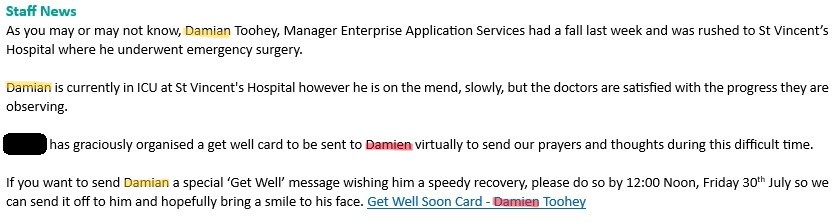
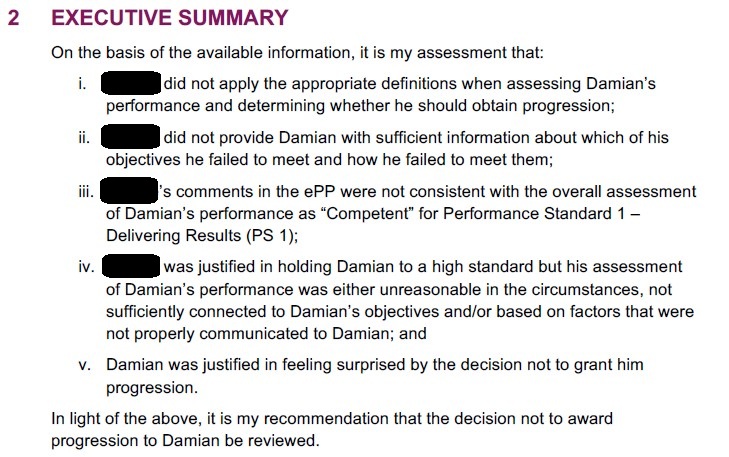
In Victoria, a Departmental Secretary can use Donald Trump as a motivational image in an all-staff meeting and still be considered to have met 100% of the objectives needed for a Public Service Medal (PSM). Compare this what happens when you have a stroke, you are considered too critical if people can't spell your name correctly for the card.
My experience - How my experience was trivalised.
- service excellence to the public, or to external or internal clients
- innovation in programme, project or policy development
- leadership, including as a member of a team or
- the achievement of more efficient processes, improved productivity or better service delivery.
The Public Service Medal is awarded twice a year by the Governor-General, a person who has expressed a desire to amplify the role of "care" within the Australian identity.
In my case, two PSM recipients were involved in what happened to me. One is described as having "exemplary leadership" and "dedication and commitment to the Victorian Public Service, and to the community, have been of the highest calibre". The other is described as an "active promoter of inclusion and diversity with initiatives to create culturally-safe workplaces for staff".
Remember, "To err is to be human but how you acknowledge and handle those errors - rather than the error itself - will define you (and your brand).” For some reason (and it might be stroke brain), I cannot understand how any of what happened to me satisfies any of these objectives to the 100% level.
If someone could explain this to me, it would be much appreciated.
This has taken me a long time in my journey to be able to reach this point. While not spelling a person's name correctly may be considered by some as trivial, if the context associated with it is of significance, then trivial becomes something else (especially if trauma is involved).
Hopefully, my article highlights the dangers of failing to consider the situational context and how concept creep impacts others.
This is just one of the reasons why I advocate for stroke awareness and prevention.
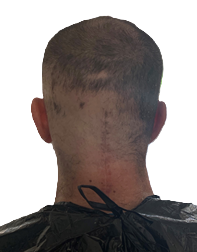
My Bulwark against the invalidation of my experience of stroke
Thank you and please check out what you can do to advocate Stroke Foundation - Advocate with us
Hopefully you already know about F.A.S.T but if you want some more creative ways to educate people - give these a go - Signs of Stroke
References
https://www.pmc.gov.au/honours-and-symbols/list-australian-honours/public-service-medal