National Stroke Week: Awareness Raising on the Road

With National Stroke Week 2026 ending today I share some personal reflections of a NSW road trip my wife, Bobby, with Bibi, our pet fox terrier, and I did, during the week.
Being a stroke survivor (into my 4th year and counting) I’ve made a voluntary pledge to raise awareness, about stroke and its lasting impacts, through my own story. Starting with being able to recognise, and act, on the classic symptoms (F.A.S.T) when witnessed in another person or myself (thankfully, no repeats since the first assault).
I planned the trip months ago, partly as a mid-winter mini-break and to gain insights into fellow regional survivors. The journey was an anticlockwise 1700km loop from Canberra, up the coast, to Port Macquarie (4 nights), then inland to Armidale (2 nights), Tamworth (2 nights), Orange (2 nights) and back to the nation’s capital.
At the public libraries in Port Macquarie and Tamworth I gave public presentations about my stroke and post-stroke recovery based on my book, Let’s go for a walk, which records the first 18 months of my recovery after losing and working to restore my right sided mobility.
It is wonderful that regional libraries are still active communal hubs eager to offer public programs and equally, to touch base with fellow survivors to share experiences and contacts. There is great strength in localised face-to-face-in-person gatherings which offer personalised support and friendship for survivors and their carers. The latter, is a good example, as it prompted another meeting with survivors/carers at the Ex-Servicemen’s Club, in Orange.
Back in Canberra, I returned, on Friday afternoon, to the Stromlo Ward, at the University of Canberra Hospital, where I was both an in- and out-patient. To chat, and listen, to current patients affected by brain injury, including stroke, about our journeys. I highlighted the importance of being an active participant in our own recovery; that there is no end date to recovery; the significance of setting personal goals and establishing support networks—whether through family, friends or a professional; of being kind to yourself; the necessity of sticking with ongoing exercise practices for restoring movement; the value of rest in between; and not least, giving attention to our mental wellbeing, along with the physical.
For additional support avenues, I noted the Stroke Foundations website, as a go-to for people, whether survivors, family members or carers, who unexpectedly find their lives impacted by stroke, and need instant, reliable information. Strokeline (1800 787 653) and EnableME, were given a special mention.
I also referenced Bill Gasiamis, a Melbournian survivor’s ongoing podcast recoveryafterstroke.com, as another useful resource, with his 400+ personal interviews offering a down to earth, emphatic and listenable dive into the complex world of stroke and stroke recovery.
I thank Amy, Phil, Vicky, Kylie, Jeff and Leanne (Librarian) in Port Macquarie; Jonathan (Librarian), Pauline (journalist) and other guests in Tamworth; to Sue, Bev, Marnie, Michelle and Vicky in Orange and Mel (OT) and patients at Stromlo for their welcome and openness to listen to aspects of my story, and to share parts of their own, as we all continue to stimulate our brains, and exercise our bodies, to engage in appreciating life and continue to provide purpose and meaning to our lives.
Thank you.
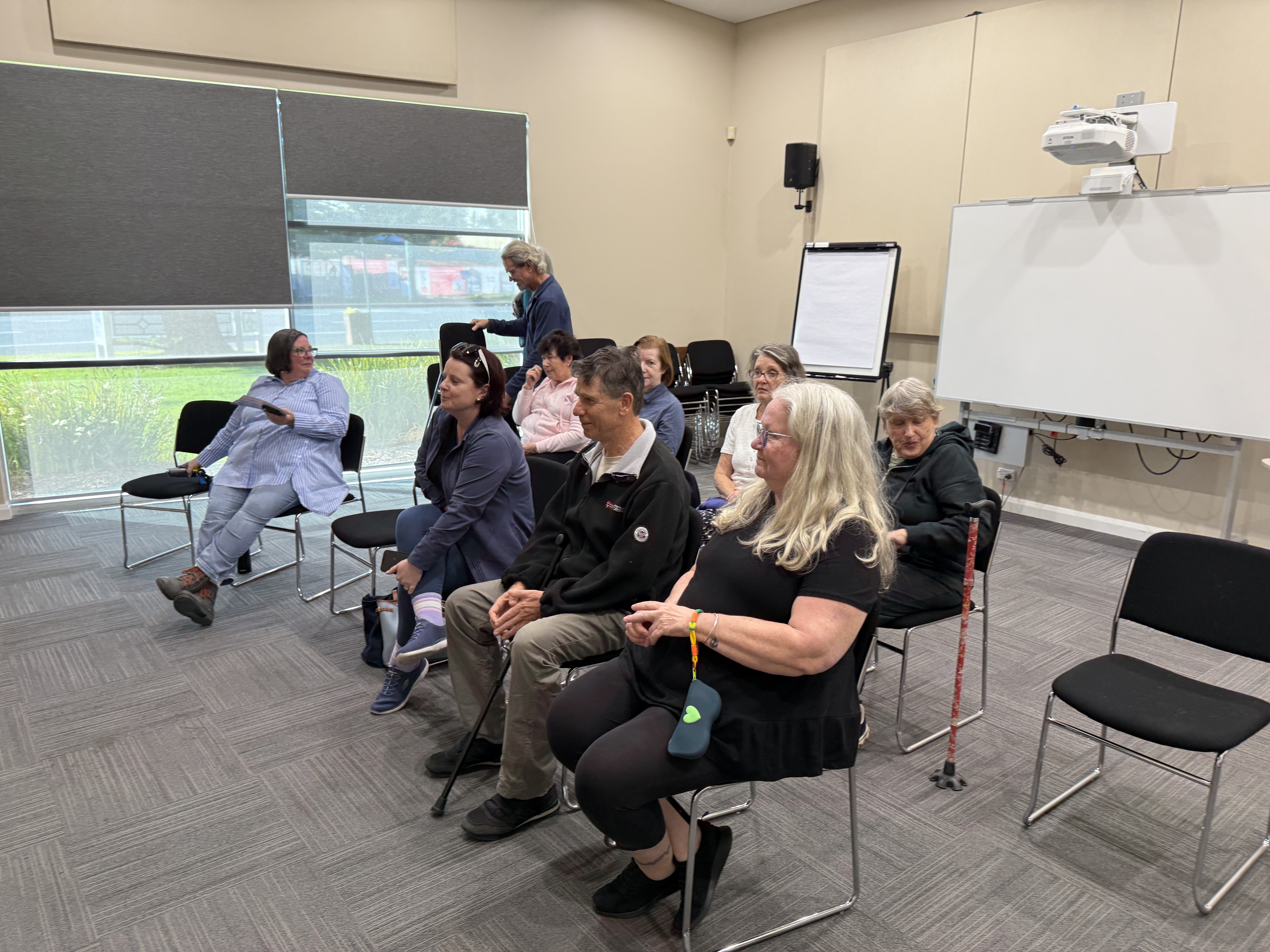
Part of audience at library in Port Macquarie, including Amy and Phil in front row.
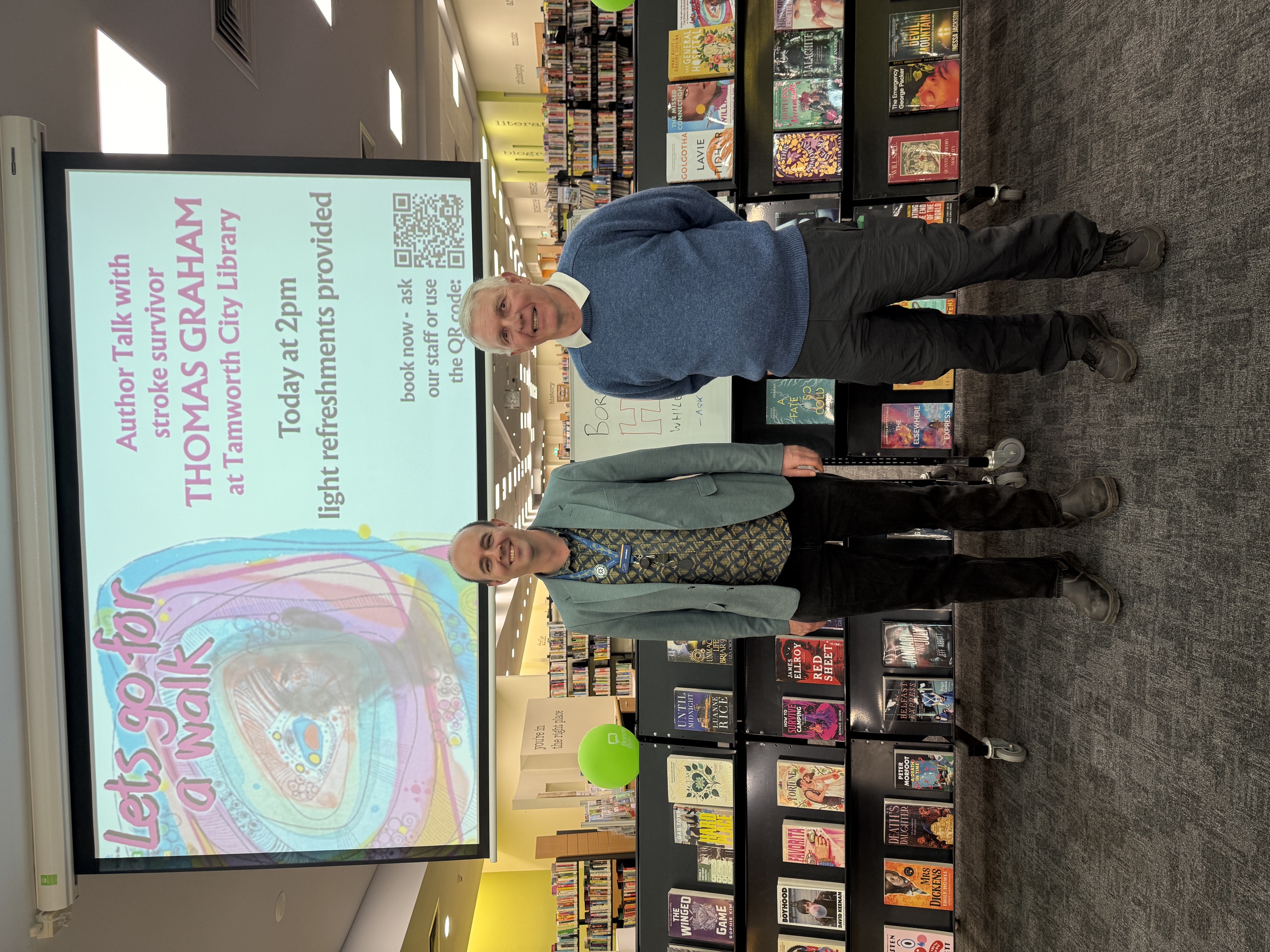
Jonathan (librarian) and myself at Central Northern Regional Library at Tamworth
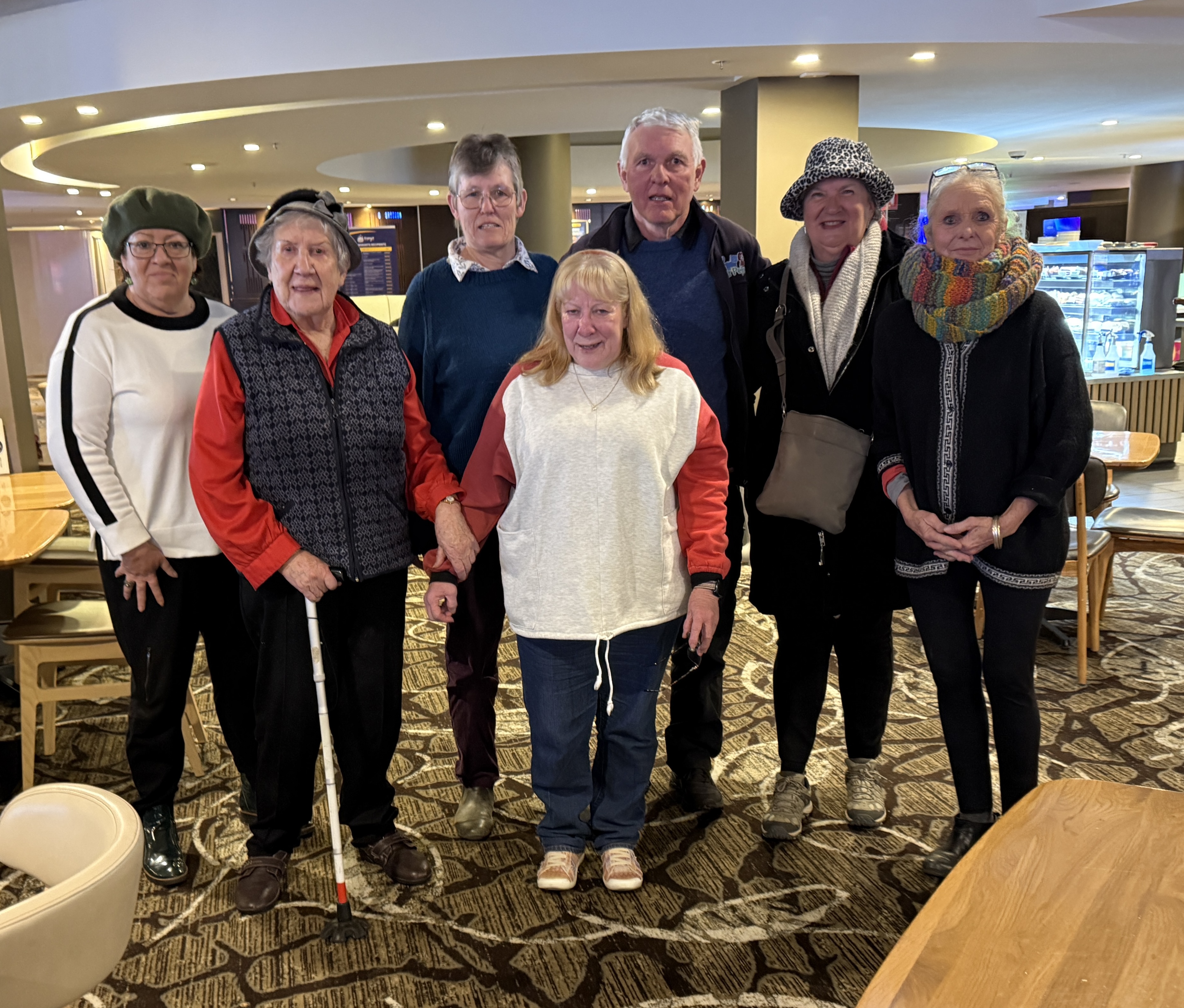
Michelle, Helen, Sue, Vicky, Thomas, Bobby and Marnie at Ex- Servicemen's Club in Orange