“At 30, I had a brain injury. Three years later, society still gets recovery wrong”

This story from Sophia Anna-Faria was recently shared on the Stroke Foundation Facebook page, and got a big response. We've decided to share it here too, so the EnableMe community can respond:
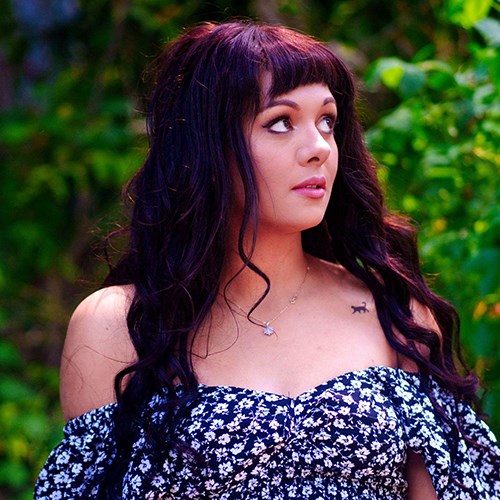
Photo by Paul Campbell Photography (2025)
"Close your eyes and breathe in as we ascend above the stars."
I cling to the lilting voice of my hypnosis podcast. But I'm not ascending above any stars tonight.
Tonight, I'm about to have a stroke again.
Not literally, of course. But every night when I get into bed, it's the 19th of October 2023 and I'm about to die.
The room starts spinning. That's my cue to begin counting backwards from twenty.
Twenty. Nineteen. Eighteen.
I tell myself that if the spinning hasn't stopped by the time I reach one, I'll call an ambulance. It's a ritual I've developed to stop myself turning up at the emergency department every time my body convinces me I'm back there.
My occupational therapist says it’s PTSD.
I always thought PTSD looked like dramatic flashbacks and visible emotional distress. Instead, it feels as though I'm physically transported back to the night a part of my brain died.
My neurologist describes it as post-stroke confabulation, a form of memory displacement where the brain struggles to reconcile physical healing with neurological reality. The memory isn't recalled so much as relived. The damaged parts of my brain overlay a memory onto the present moment until, for those agonising sixty seconds, I am back there again.
This happens every night.
By morning, I'm exhausted.
Not normal tired. Not the kind that disappears after a coffee.
It's a heavy, pervasive fatigue that settles over my brain. Like trying to run a 2026 operating system on a 1998 Windows version of my computer.
I make a coffee and sit down to work. Every appointment in my calendar is colour-coded because if it isn't, I'll forget what it means.
My eyes flick between my laptop and second screen and the dizziness starts almost immediately.
Three meetings in, my brain starts to fail.
I've become remarkably good at masking.
Everyone says "um" when they can't find the right word.
It just happens fifty times a day for me.
"Have you tried calling your—"
I know the word is GP. I can picture a doctor. I know exactly what I'm trying to say.
But the word won't come out.
My face flushes red as I wait for the other person to fill in the blank.
Sometimes I laugh it off.
"Sorry. Bit brain-dead today."
Ironically, nobody realises I'm being literal.
On a first date, we sit in a Mexican restaurant. I ask question after question and pray he doesn't notice when I knock over my glass of Shiraz. Three sips of wine is all it takes for my cerebellum to remind me it no longer works the way it once did.
I become louder, more animated, funnier. Not because I'm relaxed, but because I'm compensating.
The more energy my brain needs to follow the conversation, filtering the music and remembering how to speak English, the harder I must work to appear normal.
I cross my legs and try to ignore the hive-like welts spreading across my thighs.
"Tell me more about yourself, Sophia.”
I can barely hear him above the high-pitched ringing in my ears and the sudden sensation that I'm underwater.
The tinnitus arrives every time I'm in a loud environment.
In stroke circles, we call this overstimulation.
In my world, I call it disabling.
I answer his question, then excuse myself to the bathroom.
As I stand, I feel drunk.
I silently remind myself how to put one foot in front of the other.
Some days my brain forgets left from right. On those days, I walk like a NASCAR driver who's somehow left the track - unpredictable, slightly dangerous, and occasionally funny.
The problem is that I really like my date.
And it's too early in the evening to say:
"Just so you know, I had a brain injury a few years ago. This environment is triggering almost every symptom I have and I’m trying not to appear like the victim of drug and alcohol abuse.”
When I go home that evening, I make a note of every single thing we discussed. His name, the name of his dog, his parents' names knowing fully that by morning, I would have forgotten about 90% of our conversation. That sort of memory loss comes across as a selfish lack of interest in people after a while.
I rehearse important facts about my friends' lives and, for the most part, manage to gather the scattered puzzle pieces of past conversations and fit them back together. The memory loss is pervasive, though. Alongside forgetting to check my mail, bring in the bins, or remember where I left my wallet, keys, laptop, or whatever important item I've misplaced this time, I live in a constant state of fear that I've forgotten something important.
What year is it? When did I last eat? What did I say in that conversation? Did I run a red light?
We live in such an automated world that I can outsource much of my memory to a calendar and a collection of reminders. The anxiety, however, remains.
We label people with a disability as high functioning when they assimilate back into society. If you can work, run a household, maintain some degree of independence and show up looking presentable in the world, you are high functioning.
So here I am: a woman in her thirties navigating life with a changed brain.
Some days I'm fighting for justice and humanity at work, falling in love, setting six alarms to make sure I wake up on time and managing to have a conversation without forgetting my words.
Other days, I'm doing all of the above. But I am not functioning.
— Sophia Anna-Faria