Vision problems after stroke - prevalence and recovery

In Australia, there has been a reduction in stroke event rates and stroke related deaths. However, the actual number of stroke events has increased due mainly to an ageing population.
[33 700 registered stroke events in Australia in 2009]
Visual impairment is one type of disability that can occur following stroke, and it is well established that some form of visual impairment is common in both acute and long-term stages of recovery.
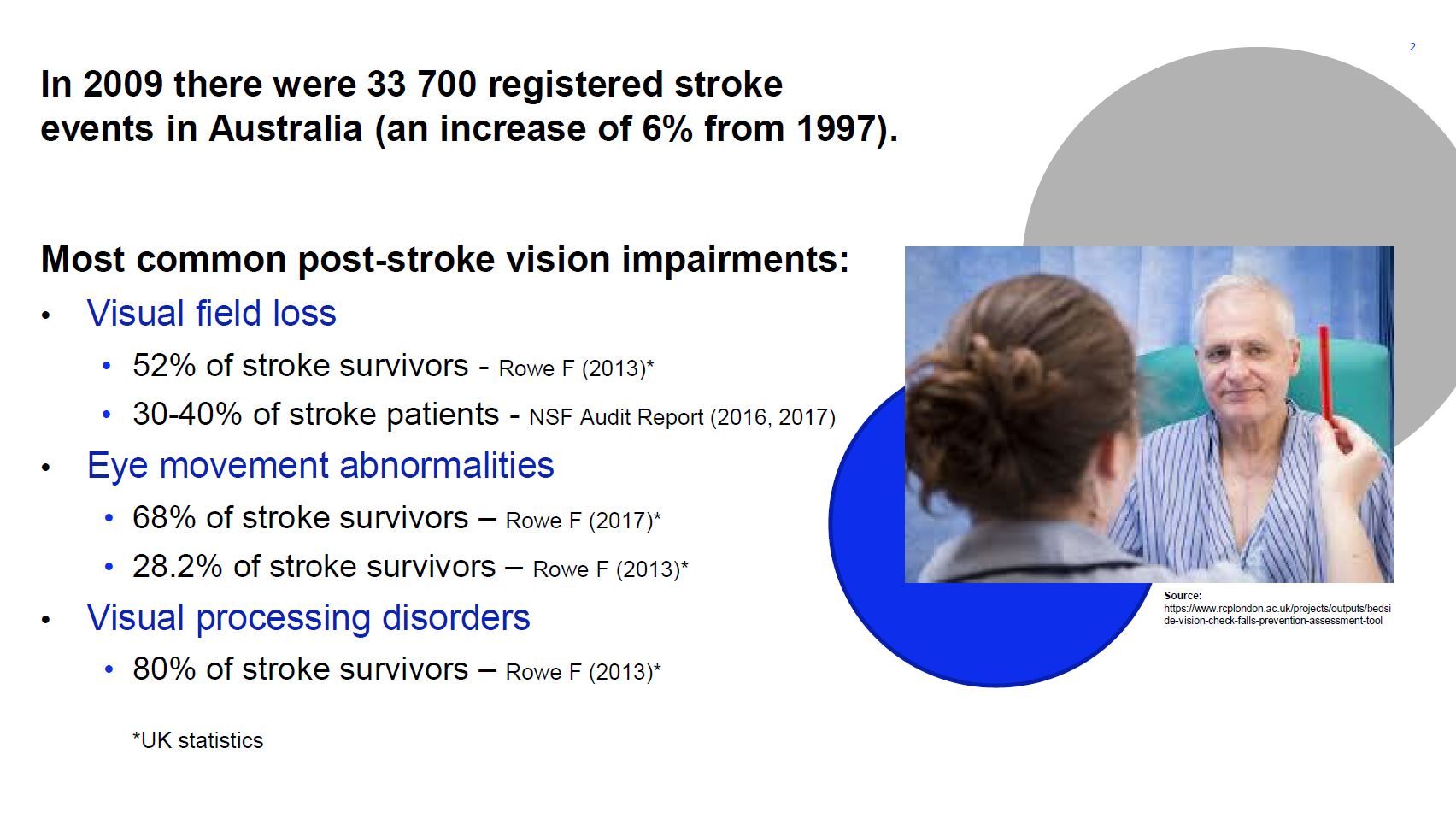
The most commonly reported post-stroke visual problems include:
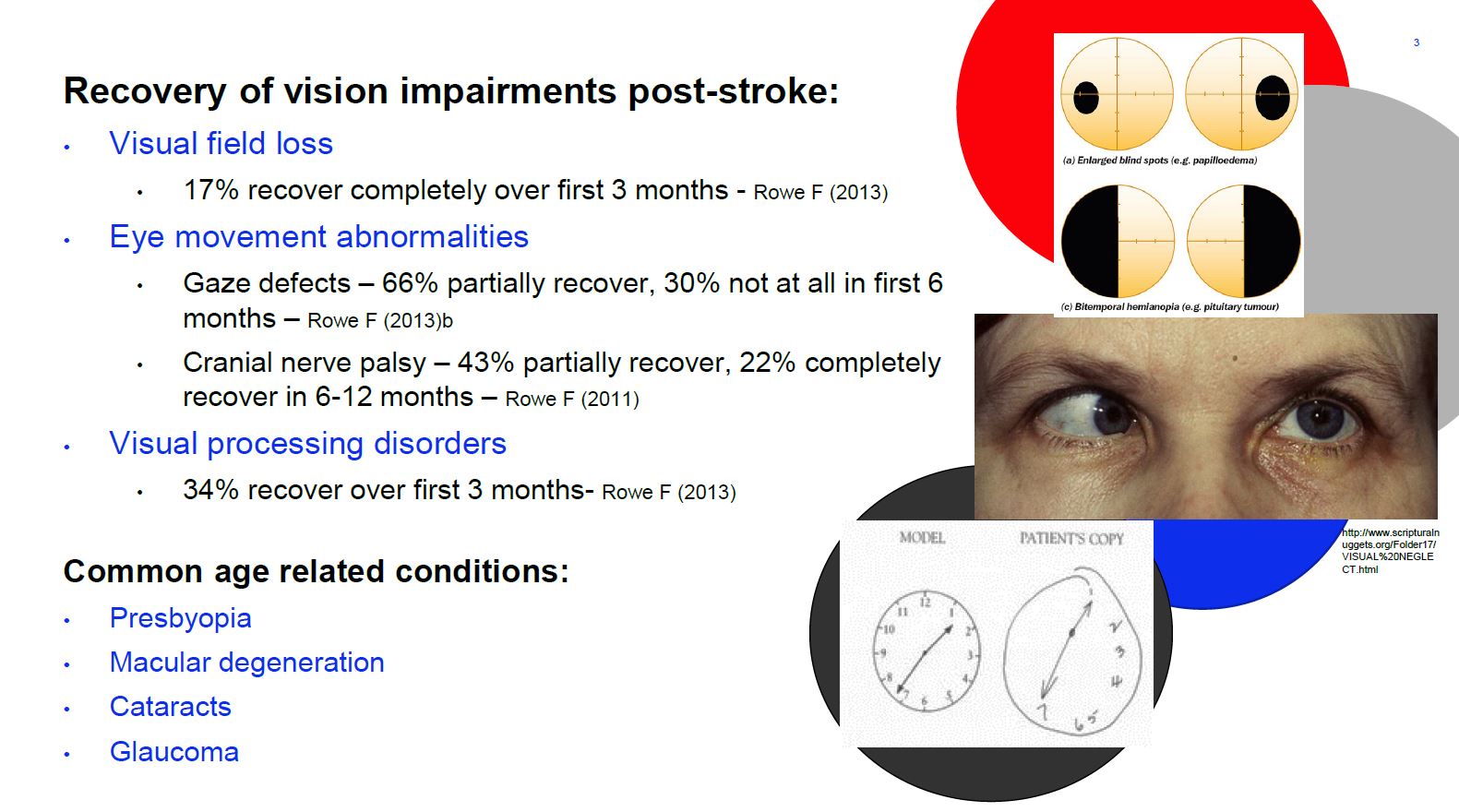
- Visual field loss
(where one side or one part of your field of view is missing)
Affecting:
--> 52% of stroke survivors – Rowe F (2013)
--> 30 – 40% of stroke patients – NSF Audit Report (2016,2017) - Eye movement abnormalities
(this can include eye turns causing double vision, difficulty looking in certain directions, involuntary jerky movement of the eyes)
Affecting:
--> 68% of stroke survivors – Rowe F (2017)
--> 28.2% of stroke survivors – Rowe F (2013) - Visual processing disorders
(this includes the very common, 'visual neglect', where a stroke survivor may not be aware of images or objects to one side, primarily the left side)
Affecting:
--> 80% of stroke survivors – Rowe F (2013)
The recovery of these conditions depends on the type of deficit, the severity of the stroke, and the overall health of the individual.
An estimated 17% of visual field loss recovers completely over the first 3 months, while 34% of visual processing disorders are found to recover.
Most gaze defects only partially recover (66%) or do not recover at all (30%), over a 6 month period post-stroke.
For ocular cranial nerve palsies, some recovery over 6-12 months post onset is expected although, recovery is often partial with only approximately 22% recovering completely.
It is important to keep in mind that within the age group most susceptible to stroke, those aged over 65, there is also a high prevalence of pre-existing eye conditions such as difficulty seeing up close, macula degeneration, cataracts and glaucoma. The presence of these age-related conditions can further compromise the quality of vision and should be considered when providing ocular care to stroke survivors.