Gardening as stroke therapy By Peter Hocking

I was not a poster child for stroke recovery. My stroke in early 2014 left me with serious right side weakness, in the arm and leg. Soon after discharge from my rehabilitation hospital after 6 weeks, I was diagnosed with Pulmonary Embolism (blood clots on a lung) and re-admitted to hospital. When the weakness, breathlessness and debilitating fatigue associated with the P.E. started to abate, a good three months after the stroke, I felt my rehab had hardly progressed since day one. Given the prevailing wisdom of the experts is that the first 3 to 6 months are crucial in stroke rehab, and that after nearly a year I was barely weaned off my wheelchair, my prospects did not seem rosy. Since that first year however, I have made encouraging physical progress each year, albeit at the rather glacial pace that seems typical of stroke recovery.
I believe my love of gardening has been a significant factor. Our garden has always been one of my great loves and the thought of being denied working in it was hard to accept. Even that first year I tried to help out a little, despite not being able to stand for any length of time, walk more than a few metres, or to hold things (my one usable hand being needed for the walking stick). Since then I have persisted, and steadily been able to manage more and more. I have no doubt the hard physical demands have been as beneficial to my balance and mobility as any “official” physiotherapy or formal gym regime.
This is not to pretend it is easy; for many it will be tough.
For example, in my case, at first, with no standing stamina I would have to work seated and my wife bring me small jobs, such as mixing sprays for her, or re-potting pot plants. Even later when I could stand, and move around the garden, everything was so frustratingly slow and inefficient, and often so physically painful, giving up looked very tempting. The fatigue, that seems so typical of strokes, meant that my frequent rest breaks added up to more than the work periods.
In addition to weakness and non responsiveness, my arm suffers excess muscle rigidity. My wrist seems frozen (in the wrong position) so even with now some increased hand strength I cannot hold, say, a wheelbarrow handle or lopping shears. Because of lack of ankle/knee strength, I cannot kneel or crouch, so working at ground level is murder on the back.
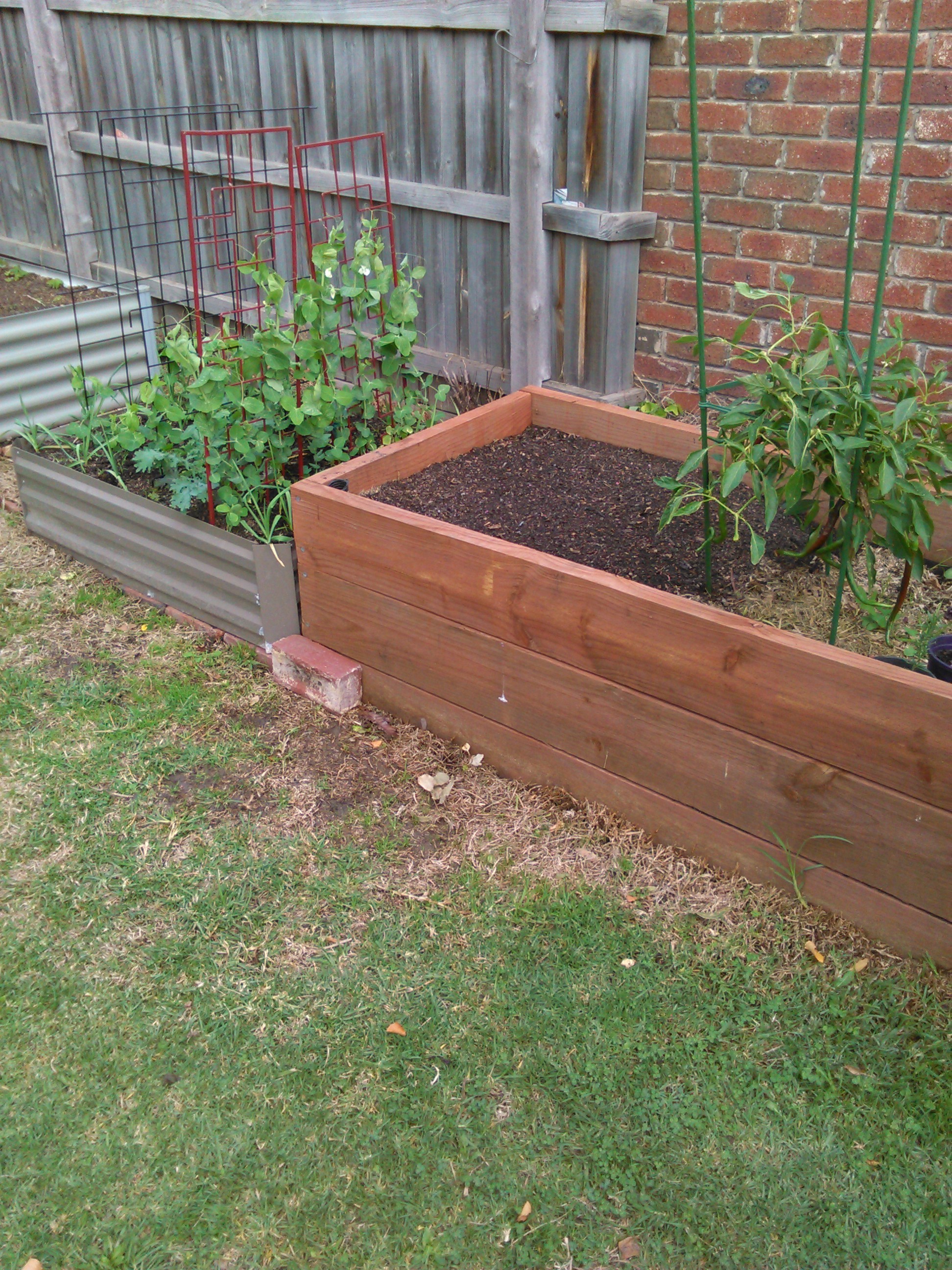
Persistence however will pay off. A bit of thought can help with the worst of limitations. Weeding tools with longer handles (but not too long, about 30-40 cm) are obtainable and very useful; a four wheel garden trolley is an excellent substitute for a wheelbarrow if you are one handed, and raised garden beds solve back strain problems; or even just a milk crate to sit on is helpful.
Compromise; and realistic expectations and goals get you a long way.
With time and dedication, I am now stronger and I can spend longer in the garden,
with few rest breaks. This is great mentally for me, of course, to be able to resume a former beloved activity. Just as valuable however, is the physical dividend.
I still have to walk any real distance with a stick in my left (good) hand, but now that I can do more gardening tasks, the greater demands for this hand are such I am increasingly forced to put the stick down and stumble around without it. Our garden is no bowling green. The ground surface is quite uneven and abounds with hollows and bumps, unlike the smooth pavement I usually walk on. All this helps improve my balance and develops control and flexibility in foot, ankle and knee.
The garden also forces me to try to use my right (bad) hand more; there are just so many tasks I need two hands for; or at least a bit more than one hand. Inside, and especially with other people around for help, it is just too easy to get by one-handed and do without the right hand completely. This, of course, is a bad habit and not helpful in rehabilitation and recovery. The demands of the garden help me fight this temptation.
If a conventional in-ground garden proves too much for you, or you have down-sized and space is limited, great satisfaction can still be obtained from pot plants. Geraniums, fuchsias, cacti, and many vegetables such as lettuce and herbs are examples of plants that do well in pots or hanging baskets.
A great pot plant option for those with physical limitations, is the common cymbidium orchid, which only thrives in pots. Orchids have this intimidating mystique and an undeserved reputation for being demanding, and hard to grow; but nothing is further from the truth. With the right speciality potting mix and a sunny outlook, they need minimal on-going care, and are extremely tough and forgiving of neglect; while rewarding their owner with spectacular flowerings.
So, if gardening is (or was) one of your loves, don't let a stroke deprive you of its pleasures. You may not be able to get as much out of it as before, but it can still be a great satisfaction, and, in my opinion, great rehabilitation. I would much sooner spend two hours working myself to exhaustion with my plants than in the gym.
DISCLAIMER: The above represents the writer's personal experience and opinions and should not be taken as advice of a medical nature. Rehabilitation should be undertaken with appropriate professional advice and/or supervision.