My sons strokes are caused by a rare genetic condition By Cathy

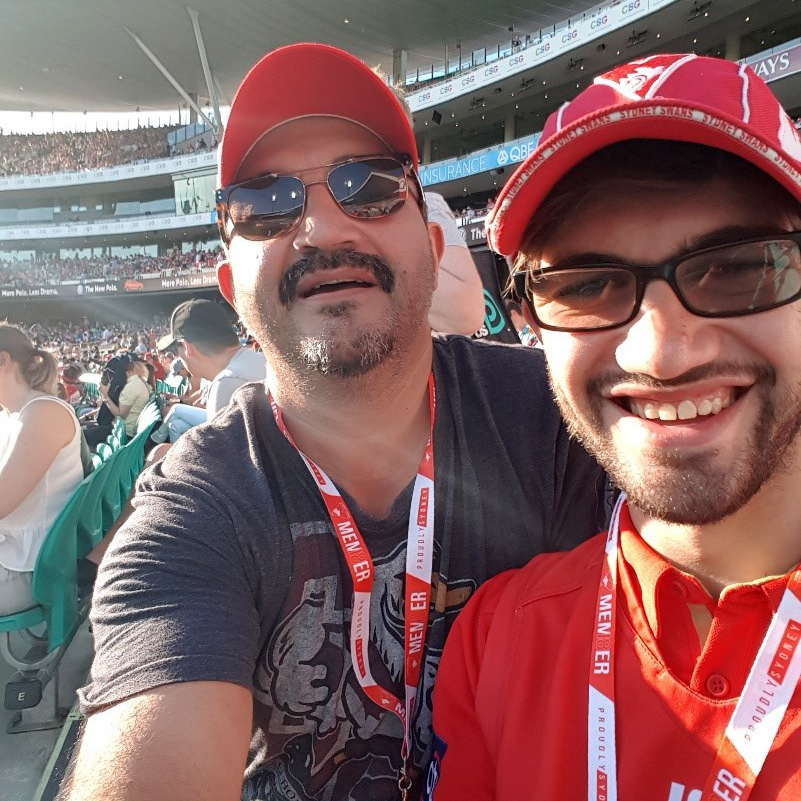
My beloved son Zachary is 23 and has had to cope with illness all his life.
He has endured test after test after test as doctors have tried to make sense of his symptoms. Over the years these have included everything from being unable to swallow or talk, to severe cramps, lethargy and headaches.
The one condition Zac was diagnosed with early was cerebral palsy. Then when Zac was 14, he was at school when he suffered a stroke. It would be the first of many.
Zac’s stroke came as a shock. We desperately wanted to know what had caused it, so we could prevent it from happening again. There were more tests, there was more waiting, but we didn’t get the answers we desperately wanted. Zac’s condition deteriorated to the point he was unable to walk. It was an incredibly challenging time for him and for me as a mother.
Zac would have headaches and blackouts. Looking back now, we believe he was having small strokes at the time. But his paediatric neurologist believed his stroke had been a one-off. We sought a second opinion from another neurologist and a metabolic specialist, but after a year of extensive testing, no cause was found.
In time, Zac appeared to stabilise, but it did not last. At the age of 20, Zac suffered two strokes within a six-month period. His neurologist performed some genetic testing – sending a blood sample to Germany for analysis. He was diagnosed with a rare genetic condition (COL4a1), which weakens the blood vessels in the brain.
After so many years in the wilderness, we finally knew why Zac kept having strokes. But sadly, there is currently no treatment for this condition. Zac has to live with uncertainty and cope each day with the lasting effects of each stroke on his mobility and his physical appearance.
Throughout the years, Zac has had physiotherapy, speech therapy, occupational therapy, psychology and botox injections to help reduce the spasticity in his limbs. At the moment, he is having physiotherapy sessions every week and going to the gym with an exercise physiologist which seems to be helping.
Zac has endured so much. He has also suffered anxiety and depression. Mentally he feels isolated and exhausted. Zac opts out of social events or meeting new people because his speech can be hard to understand or he is unable to keep up with conversations in groups.
Everyday tasks can be difficult for Zac and takes longer to complete them than others. When he eats or drinks he constantly coughs. The list goes on.
Zac’s most recent strokes were three weeks apart in March 2018. He has reached the point where he refuses to go to hospital because he is in rooms with elderly people who have other issues like dementia. Zac feels like he doesn’t fit in. It’s unsettling for him and gives him extreme anxiety.
Zac is only 23 and has faced – and continues to face – so much. But he is always smiling. The thing he loves most is going to the AFL with his dad to see the Swans play.
As for me, my heart breaks for my son every day. I have tried contacting several overseas researchers about his genetic condition to see if there have been any advancements, but I’ve had no luck. Much of the research being undertaken seems to focus on strokes affecting older people or other COL4a1-related disorders.
Other researchers have not even heard of this condition or understand it.
I’m not sure what our next step will be, but I do know that I will continue to fight for my son. Much more awareness of childhood stroke is needed along with the effect of the COL4a1 genetic condition. This is why I am sharing Zac’s story.