Richard’s story: How a good discharge plan gave Richard’s confidence back

I had my stroke on 22 September 2016 at 2am in the morning, I had suffered a massive heart attack eighteen months earlier but the heart attack and stroke are not related.
My stroke came ‘out of the blue’, they are still trying to find out why and if a future one is likely or can be prevented.
When I had my stroke I was sent straight to Royal Brisbane Hospital and admitted to the Stroke Unit.
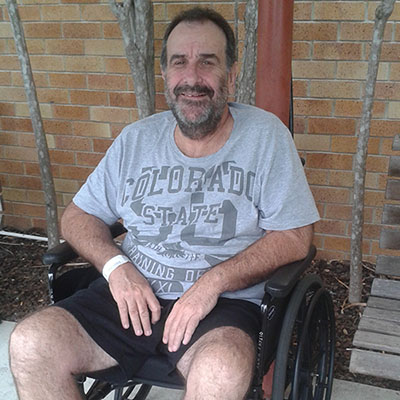
In the acute ward there was a lot of navel gazing and ‘see how he goes’ there is not a lot of intervention save from removing the clot - which fortunately they didn’t have to do with me. I was discharged from hospital after a week and sent to GARU Rehab Unit for more intensive rehabilitation.
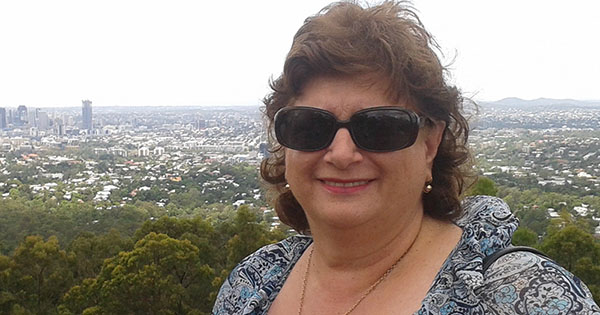
After completing rehab with the different allied health professionals a few times each day; Occupational Therapy, Physiotherapy and Speech Pathology, I was given a discharge plan essentially coordinated by the OT Department. Before discharge the supervisor attended my house to examine what may be need in the way of modification, and given direction to Home Assist, who eventually completed the modifications prior to my discharge. Carmen my wife was very involved with this and was provided all the information she needed, which gave us both a lot more confidence in what to expect and how to handle everyday life when I came home.
My discharge plan was discussed at length with Carmen and myself. We discussed my ability to complete the tasks that I need to do each day - that is the point of the plan as I saw it. We had many discussions with the OT, and I was fortunate that Carmen took a daily interest in how things progressed and was intimately involved in the whole process. The majority of the time I listened - my wife was a great advocate and spent a lot of time at the hospital with the stroke team who she got to know well.
One of the technologies involved in the rehab was the use of video. The therapy providers used this technology for their own use on occasions, and my wife would record my advancement on her phone - which was of great benefit to me. The reason it was so helpful is that even though you are advancing, you don’t see it in your own head. Others may observe improvement but you feel the same. Being able to see what others are seeing through video was not only helpful, it was instructional and deeply satisfying.
As part of the rehab process I was sent for follow up to North Lakes Health Precinct for more weekly OT, Physio and Speech. It was there in particular the Speech Pathologist would use video to record and play back to me - my attempts at passages and quiz’s - it was greatly appreciated. The OT was similarly concentrating rehab on measurement of certain goals and games and likewise the Physio would record and graph progress. I formed a valuable partnership with the rehab team, and of course I am fortunate to have family support on an ongoing basis.
I really would like to convey to allied health professionals, whilst the scores were mentioned and I know mine were good, I feel that there could be more emphasis put on the journey through rehab to return to pre-stroke abilities. For us it is the point of the whole thing - the journey - there is lot of “wait and see” which is hard to hear especially for a man who is pushing his rehab hard with commitment and aggression. I would have liked the scores to be pushed harder and in particular video of my progression always offered - to more effectively document my journey back to health.
Follow-up is also needed - a phone call to go through the plan again, and a visit to see if what was discussed is happening. I am fortunate that I have Carmen’s continued commitment, but that has to be ascertained at the time - will this person have ongoing carer support? In my experience the person doing the ‘caring’ is the person the discharge plan should be directed to - in my case Carmen. I left with a good plan - especially physio. But I could see that others who didn’t have a carer were at a disadvantage as they didn’t have someone to take on that role. For those who have zero or minimal support - it’s vital to get follow-up.
Once I was home I received a call from Stroke Foundation Strokeline which provided the follow-up required to keep us informed that we were not forgotten.
I am now setting new goals for myself, I want to drive again and get back to work. I have recently finished a twelve week course at North Lakes and I am continuing to get follow-up to check and benchmark where I am at. I think it would be tremendous to get twelve monthly follow-up calls moving forward to check my progress and offer support.
Emotionally having a thorough discharge plan has had a huge and positive impact on my confidence and my willingness to challenge myself. For Carmen it has armed her with a plan to respond to whatever happens day to day.
I did learn that - Not one size fits all.