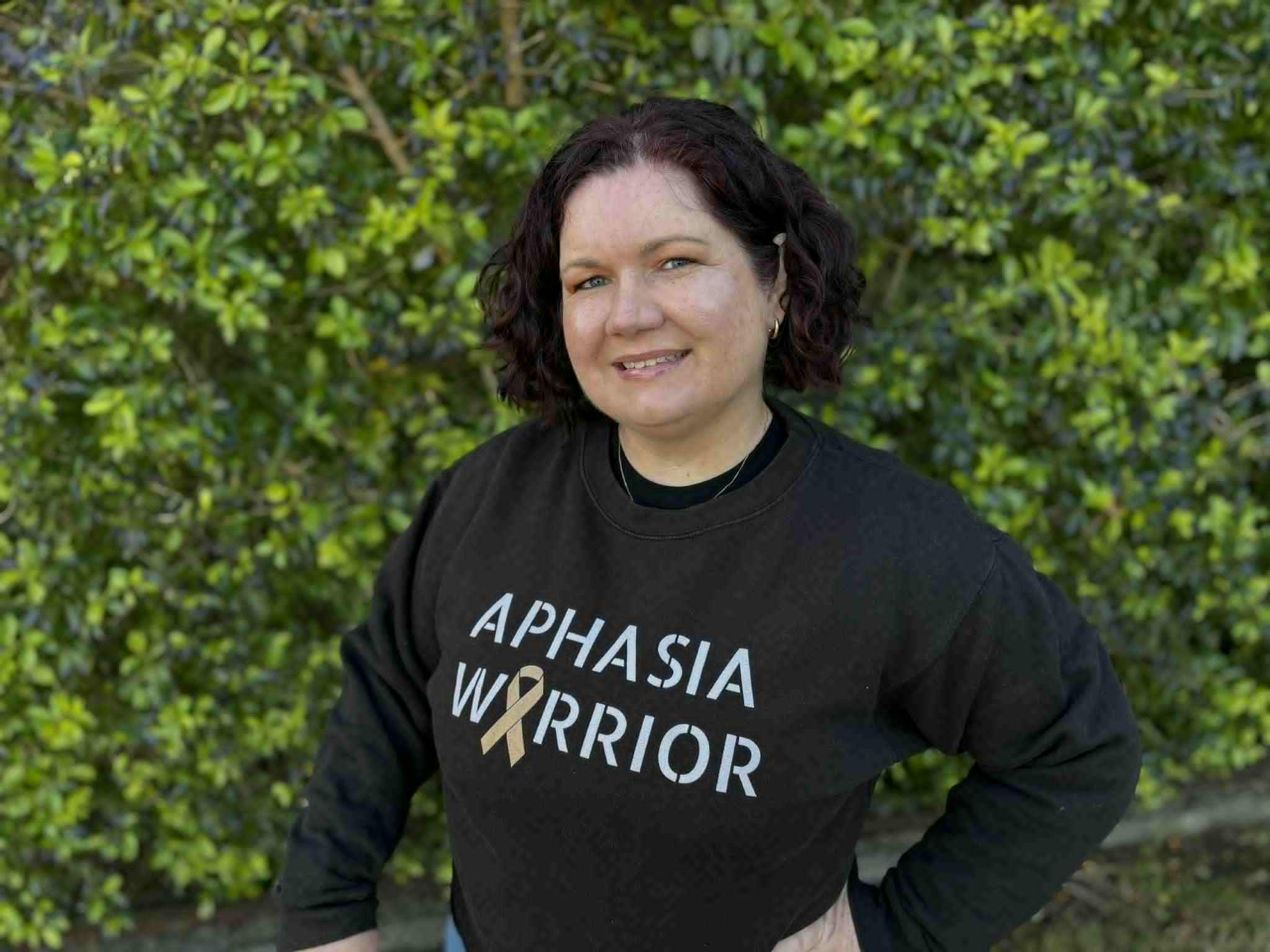
The Aus and New Zealand stroke conference with community member Emma Beesley

Emma’s trip to Hobart with the Australian and New Zealand Stroke Organisation Conference 2025
On Tuesday 2 September at 12:00pm I shut down my computer and said woohoo!! I’m off to Hobart!!
Mum and I flew from Newcastle to Hobart with one stopover in Melbourne. It was dark in Hobart but when I got up the next day and I looked out the window it was snowing on Mount Wellington!!
On Wednesday 3 September at 8am Mum and I went down to the conference room and bumped into Brenda Booth who you all know from the Central Coast. We were chatting away and other lived experience stroke survivors started rolling in. It was so lovely to see them all again!! Cal Rixon and I hugged because it has been ages since we met in person!! About 5 years!! And Letisha Living, who had a stroke about 15 years ago. She was an author to the book ‘Finding Yourself After Stroke’ and I did a chapter on this.
At 8:30am we sat down to listen to the key presenters who were from the US, speaking about pregnancy and stroke, and Switzerland, speaking about IV thrombolysis. We had morning tea and then went into one of three rooms. Two of the rooms were quite hard to say so I won’t go into detail but one of the rooms I went into was digital health. The presenters were talking about innovative digital tools to detect motor speech and cognitive function and technology based interventions to empower people with aphasia.
We had lunch and then it was my turn to do the talking!! Presented by Brenda Booth and Adrian O’Malley, we talked about strategies for equity, diversity and inclusion, which is basically lived experience stroke survivors who want to be part of the research experience. The panel were Cal Rixon, Dr Sabine Allida who spoke for the migrant’s stroke, Sarah Wallace and David Copland who spoke for the aphasia people and me!! We didn’t have any people joining us, only 30 people, which was a little disappointing but we got the message across. One of the people who was 10 minutes late stopped and I waved them in. After the presentation he was stating that he really enjoyed the presentation and it was a shame that the doctors, researchers and clinicians were missing this!!
At 4pm a few people went to see the posters about stroke. Helen Wallace, who is working on her PhD, talked about driving after aphasia. I was fortunate about talking and driving after stroke and aphasia and Helen was really understanding.
We met up for drinkies at 5pm and I was talking to Elisha who had a stroke about 15 years ago when she was 16 weeks pregnant. She doesn’t have aphasia.
Mum and I went for a brief dinner (i.e. dessert) and we called it a day!! I was exhausted!!
Yesterday 4 September I looked out the window and saw that it was still snowing on top of Mount Wellington!! I packed up my suitcase and said goodbye to my room and headed downstairs to day two of the conference!
We had three keynote speakers, one from the UK, then two from the USA. One of the USA speakers was talking about AI and stroke which was really interesting.
We had morning tea and went straight into one of three rooms. Mum and I went into the room which is called Life After Stroke. We had presentations about sexuality and intimacy after stroke, anxiety and depression post-stroke and a three-year update on the Young Stroke Project.
At 12:00pm I was time for me to leave to go to the airport. Boooo!! I said goodbye to all of my lived experience stroke survivors and gave a hug to Mum and got in a taxi to go to the Hobart airport.
Now I am reading this at Melbourne airport, eating a cheeseburger, my favourite, and it’s taking me one and a half hours to do this review!
It was a great holiday, I mean, conference!
Thank you!! 🤩