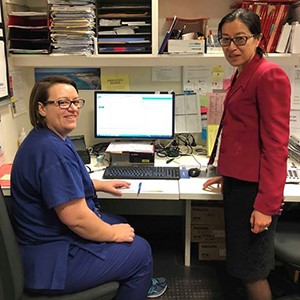
I had my cerebellar stroke in January 2016 at the age of 50 - by Mary

By Mary
Having exercised most of my life, I was fit and healthy. I was training for triathlons, being a Mum and working as the Director of Nursing at The Royal Melbourne Hospital.
My life was busy, and I was loving every minute of it. That was until one night, while reading a book to my daughter, I suddenly started to vomit. The room was spinning, and I was off balance. As a nurse I knew something was terribly wrong but wasn’t sure what – I certainly wasn’t thinking stroke.
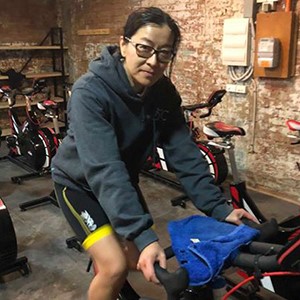
I had no feeling in my lower limbs and was unable to coordinate my legs. I knew I needed to get treatment quickly. I was rushed to the hospital and after a brain MRI, was diagnosed as having a cerebellar stroke. My family and friends were shocked, and I couldn’t believe that I had a stroke. It took me a while to digest this information even as a health professional.
I was in the acute ward at hospital for one week before being transferred to private inpatient rehabilitation for 6 weeks of intensive physio and occupational therapy. I had to learn to balance, walk and support myself independently. Most days were filled with headaches, fatigue and frustration. I shed a lot of tears and found the loss of independence after stroke depressing. I have always prided myself on being independent.
I had to depend on family and friends for most everyday tasks and I couldn’t drive so trying to get to outpatient rehabilitation was a challenge. Still the thing I missed most was my ability to walk, and to run independently. Just putting on my sneakers and running – the freedom – would I get that feeling back?
About six months after my stroke, and with the support of my Rehabilitation Consultant and Occupational Therapist, we decided to give a return to work program a try. I started with limited hours which I found demanding, as I had to take public transport to work. Even working out the train timetable was a challenge. By the time I got to work I was already exhausted. To focus on a project or a piece of work was tough as I couldn’t concentrate very well.
Although my Manager was very supportive, and despite my best efforts, I had to take a step back from working. I had given it my best shot. I was pushing myself too hard and my body and brain were not ready.
I had been seeing psychiatrists since my stroke as I was finding it hard to manage mentally. I found the experts were treating me for mental illness rather than recognising that my emotional challenges were due to damage to the cerebellum. I finally was referred to a neuropsychiatrist, which made all the difference. He suggested that I take a big break and focus on my physical and mental health, which is what I needed. I listened to his advice and it was probably the best thing I did.
I took seven months off work, worked on my walking, balance and coordination, and started practising mindfulness and meditation, which has really helped me. I had income insurance, so I was lucky enough to be able to assemble a great support team. I employed a support person to help with physical activities and tasks, and to ‘unpack’ the emotional impact that stroke had had on me. She had lived experienced with mental health and she understood my frustrations. We quickly developed a trusted friendship, I can’t thank her enough, she was a huge part of my recovery.
Fourteen months post-stroke, it was suggested that I try to volunteer, which I did. I volunteered at a local community group twice a week to get into the routine of waking up and going to work. Once I was comfortable with my new routine it was time to take the big leap back into paid work. With my Return To Work coordinator and treating team we worked out a plan. We started gradually, but I had to give up volunteering. My Managers were supportive and made sure that the project I started back with was interesting for me. I appreciate that they had thought about how important this was. I had limited capacity to begin with and being absorbed in what I was doing was helpful. I realised quickly that what I did outside work was paramount and I rested, ate well and kept my exercise and rehabilitation going. I also had regular breaks throughout day.
Being welcomed back to work by my team at the hospital was warm and overwhelming, it felt so good to be back. I wasn’t sure how I would cope, but by taking baby steps at first and then gradually building up, I was able not only to cope, but to thrive.
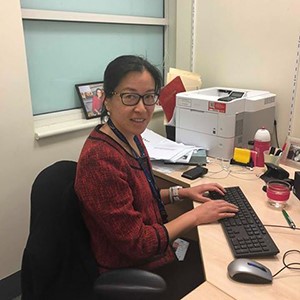
Through the work done with my treating team I had learned acceptance and the importance of being kind to myself. I am so thankful to my friends and family for being part of my journey. I had a lot of self-doubt and the uncertainty was hard to get my head around. But I stopped expecting too much of myself and learned to take my recovery one step at a time.
Throughout my journey I have experienced self-doubt, but I had help to see the bigger picture. I got to know my body in a different way and took the time to notice all the little changes, adjusting the amount of work I did accordingly. It was a slow process, which was closely monitored by the team at work.
I have learnt a lot through this experience, and if I have any wisdom to pass on, it is not to let fear stop you. Stroke puts barriers in your way each day, adding your own makes the climb that much harder.
I have been lucky my family and friends have not only supported me each step of the way, they believed in me and my future – even when I didn’t.