The power of lived experience

Thrill seekers and fellow time travelers, an experience this morning on my regular morning walk dispelled any doubt in my mind about the power and strength of lived experience being espoused by stroke survivors
Let me set the scene
On my morning walk today at about 6:30 I noticed a couple on the same side of the street walking towards me.
They looked familiar and as I got closer, I noticed that I had seen them several times before, walking on the opposite side of the street and we exchanged waves al as part of the 6:30 social club ritual.
When they got closer to me the young chap stopped and said, ‘Excuse me are you Brian and did you give a talk to student physios at the Australian Catholic University about three years ago.’
I replied that I was that person and in fact I had been doing that for the past six previous years.
He then related to me that when he attended my presentation, he was unsure of what his direction his career would be once he graduated
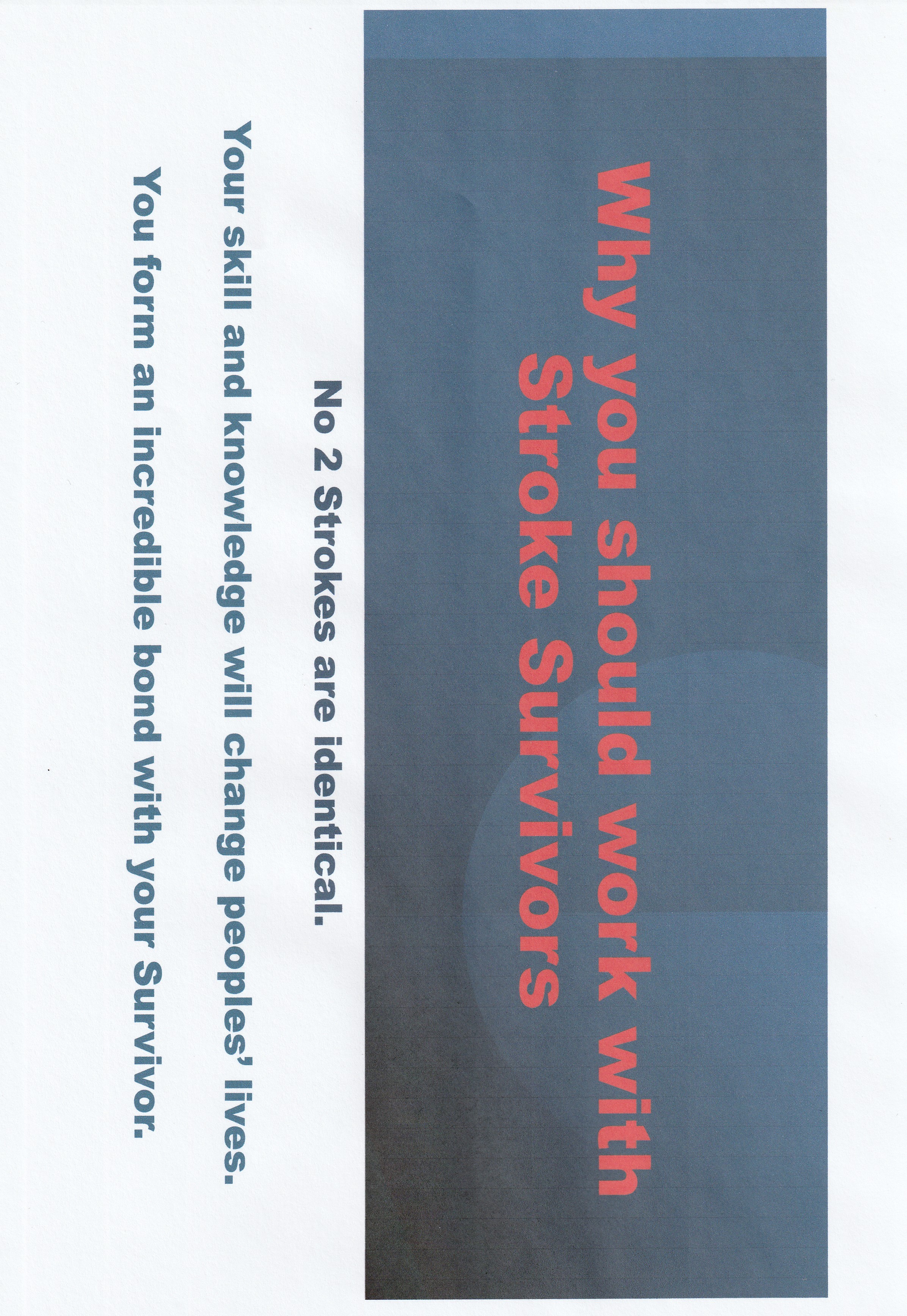
Upon hearing my presentation and in particular the Three Reasons that I gave that day for physios to work with stroke survivors it had such an effect on him he is now working full time with stroke survivors in the ACT.WOW WOW
His partner is an occupational therapist and they both are keen readers and followers of my blogs on the Stroke Foundation’s website and also my tweets.
I told them that what they had just told me was humbling and made me realise the importance and relevance of Lived Experience.
Both then went on to say that every day they both think about those Three Reasons as they work with Stroke Survivors.
They then told me their favourite blog is “20 Reps a Day aren’t going to cut it. Welcome to the Concept of Big Numbers. They often hand copies to their Stroke Survivors.
The Down Stream Effect
After I continued walking, I then started to think about what I call the Downstream Effect - a concept that I used in my corporate world whereby in any project that I was involved in we spent a great deal of time time discussing the downstream effect or what the likely results of our project [ particularly the human aspect] would be
Allow me to be anecdotal for a moment.
One project that I worked on for a large corporation a KPI [Key Performance Indicator] was a reduction of 600 FTE’s [Full Time Equivalents] out of a workforce of 3600 FTEs over a 2-year time frame.
What that means in simple terms was over 700 people would be made redundant and I would be the architect of that process.
Consequently, we spent a lot of time thinking about the downstream effect, what the results of our work would be; both not only for the corporation; but for the people involved, their wellbeing being, etc.
So, I couldn't help but think about this after our conversation today.
I must admit that after the lectures I often wondered whether they had an impact but the feedback but the feedback that we got \{Dr. Simone Dorsch and myself] from the students was that the presentations were well very received.
But I often thought about what the downstream effect was and here today on the streets of Picnic Point at about 7am I found out.
I must admit I was chuffed, and it just reinforces again the value the power of lived experience among stroke survivors
My Message to Stroke Clinicians- Think about the Downstream Effect then next time you are with a Stroke Survivor- you have the potential to have an impact long after that Survivor has left your care!
Brian A Beh
A Stroke Survivor.