Young survivor Emma Gee talks about pain management

Emma Gee is a young stroke survivor, OT and author of reinventing emma – which chronicles her recovery since her hemorrhagic stroke at 24.
Emma recently shared what she has learned about managing her pain over the last eleven years through our managing pain podcast.
We've asked Emma to elaborate on a few points that she made during the podcast. (Thanks Em)
What do you mean by holistic stroke management?
By holistic stroke management I’m referring to the importance of being mindful of the impact your stroke has had on each area of yours and others’ lives. For example pain impacts your ability to think clearly, your sleep, how it impacts your mood, function (i.e. ability to work or drive) and your relationships with others.
In being holistic we need to consider the domino-effect one pain has on every other component of our lives to properly manage it and sustain any progress long term.
Have you changed your approach to pain management over time?
Yes, I talk about this a lot in my book. Initially I viewed pain as one of the many deficits that stroke had burdened me with and blamed for not living life to my best ability. In fact I believed that until it went or I found a cure for it I wouldn't function properly.
This mindset clouded my every day, not only how I engaged in the activities I tried and how well I performed, but also how I related to others and how I perceived myself.
I was a victim. After a few years I saw the impact of having this victim mentality was having on me and chose to be a survivor - it was gradual and involved me exploring how I thought about my pain and my relationship to it .
I chose not to let this deficit dictate my life. Accepting that it was never going, it was chronic, the old ‘Em’ had gone, and I could still live a meaningful life. In fact, in accepting that my pain and being happy could co-exist I realised I didn’t need to rid this deficit to be happy in life.
What daily activities do you do and why?
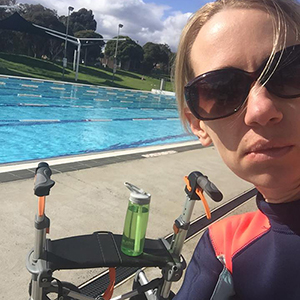
Swimming and Yoga are two of the more active activities I do daily to help manage my pain and simultaneously shift my mindset to motivate me.
Engaging in other activities like meeting friends, walking my dog Gilbert or seeing my family members are also great activities that are both good distractions which help me sustain balance, a positive mindset and put things into perspective.
If I’m tired or travelling and can’t move to manage my pain meditation also really helps me.
Every activity I do now has an emotional & physical benefit to it which I know is so important in managing my pain.
What advice do you have for health professionals in both the acute setting and then long term?
There’s a long list here but in short the importance of individualising our treatments and managing one’s recovery holistically.
Being mindful that each person’s so different, how their pain impacts them and others and that circumstances change over time – educating them so they can better inform all those people in their care.
How important is your mindset and your emotions?
Essential. Whilst I was significantly physically impacted by my stroke it’s the invisible aspects and my mindset that is the hardest thing to sustain. I’ve learnt overtime how much better I perform when I expect the best for myself. You have to think positive to be positive!
Emma has also kindly shared a few excerpts from her book about pain management in a forum about ‘reinventing emma’.