Emotional support has helped my recovery - By Marcus

My name is George Yearby, and I had an ischaemic stroke in September last year at the age of 22.
I was playing touch rugby when I noticed my vision had become strange, so I subbed myself off. This was nothing new as I’d had migraines with aura since I was a teenager. I did feel off balance but there were no major red flags. It was only when a teammate also subbed off and spoke to me that it became apparent this wasn’t a normal migraine.
He told me to sit down and have a drink, and that’s when things went downhill very quickly. I looked up and tried to speak, but only incomprehensible sounds came out. I started to panic but tried to hold it in. Shortly after, I realised that I couldn’t move my right arm or leg at all – they were paralysed. A friend recognised the F.A.S.T signs of stroke, primarily the loss of movement, and the ambulance was called. I was then rushed to hospital for a CT scan and clot retrieval.
The wait for clot retrieval surgery was agonising, because I was conscious the entire time until the surgery. I remember the fear on my family’s faces and the look in Lauren’s (my partner) eyes as they entered the room, regardless of their valiant attempts to hide it.
Fortunately, the surgery was successful. I spent a week in the acute stroke ward at Princess Alexandra Hospital and then spent a further two weeks in the rehabilitation ward. I regained my speech and movement very quickly. However, the overall recovery was a much longer process than the two weeks in rehab.
For around six months after my stroke, I struggled with fatigue, memory problems, anxiety and emotional issues. Stroke had a massive impact on me emotionally – for a while, I was terrified to do anything, and I would worry all day. Stroke has also had a huge impact on my daily activities because it has stopped me from playing sport which was a huge part of my daily life before.
Through continued follow ups with health professionals, these issues have progressively improved, although I still experience some fatigue and have to be careful not to overdo things. Overall, my recovery has been very good with very few minor ongoing issues. I'm now back to work full time and feeling positive.
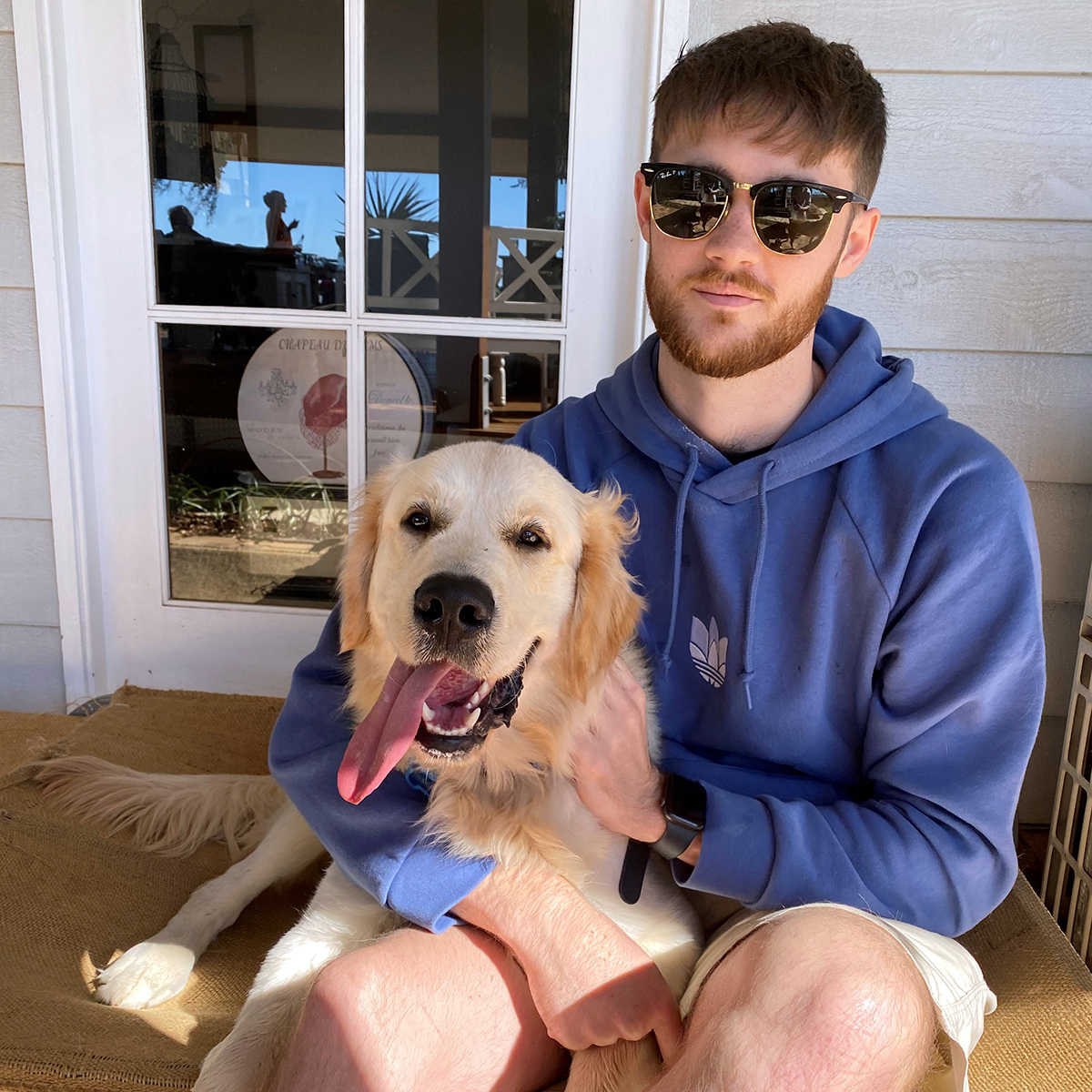
I have had fantastic support from my partner, family and close friends. I also bought my dog, Finn, to help take my mind off things and it's been the best!
Looking into the future, I don’t really have any specific goals for my recovery – I just want to continue improving and to give something back to help others who aren't as fortunate with their recoveries.
My advice for other survivors is that your emotions are incredibly important with assisting your recovery. For people struggling emotionally, be sure to speak out. Go and see a professional before it becomes a larger problem – it helps an unbelievable amount. Every stroke victim in Australia is entitled to a mental health plan which provides 5 free sessions, so use it!