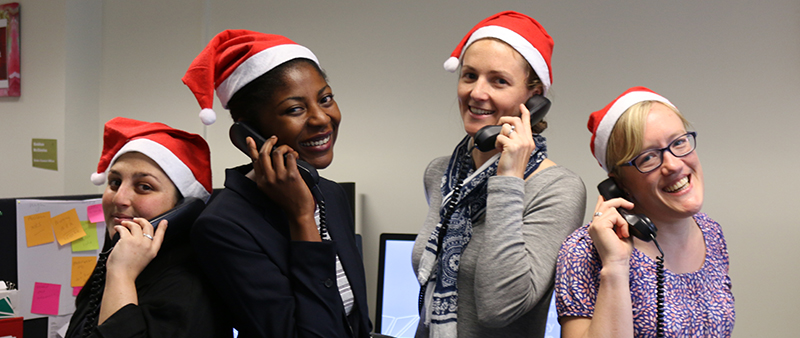
StrokeLine’s 12 Days of Christmas

Ist day: Get travelling
For many stroke survivors, having a holiday is a significant milestone in their recovery. Like many of us, you might be travelling over Christmas, or planning an adventure in the new year.
Stroke survivors are often pleasantly surprised with the help available at the airport and on the flight. StrokeLine has a great guide to flying when you have a disability – call us and we’ll send you a copy.
Nothing makes or breaks a trip like your accommodation. Checking websites will help you eliminate places that clearly won’t meet your needs before speaking directly to providers to cover off the details. When it comes to travel insurance, shop around to get the best coverage at the best price. Finally, if you have a disabled parking permit, don’t forget to take it with you if you are planning on travelling by car.
2 day: Don’t shop until you drop
We want to give gifts that are personal, useful and enjoyable but it can be tricky, especially as we get closer to Christmas. The good news is some of the best gifts don’t require navigating the Christmas crowd at the mall or shopping centre:
- Subscriptions that last all year long: movie streaming, audio books, magazines.
- Tickets that are tailor made: a movie, theatre show or sports event.
- Vouchers for a dance, photography, meditation or cooking class.
- The gift of a home-cooked meal, transport, cleaning around the home or garden.
- Personal items such as framed photos, letters of gratitude and encouragement.
3 day: Take care of yourself
The Christmas period can be full of lots of lovely times but can have its challenges too. Whatever is going on for you, make sure to take care of yourself. Here are our top tips:
Be as kind to yourself as you are to others. Keep the negative self-talk in check and remind yourself you are doing your best.
Take time out. Listen to your body. If you need a break, take a walk or find a quiet place. Practise relaxation techniques that work for you or take some time to learn some new ones (StrokeLine can help with this).
Celebrate your wins. Feel proud of your achievements. Write down positive things as they occur and place them in a jar. Read them back as a reminder that life comes with successes you might otherwise miss.
4 day: Get active
Keeping active will reduce your risk of further stroke, reduce post-stroke fatigue and help to continue your recovery. Get active for 20 to 30 minutes most days at a light to moderate intensity. A tip is to check you are not working too hard is to ensure you can talk while exercising.
Your 20 to 30 minutes can be split up into smaller bursts throughout the day. It’s okay to start small and build up gradually. Simple things such as walking or household chores count as activity, and will help you gradually improve your endurance and strength.
Over the Christmas period, stay motivated by setting some small goals with the support of your doctor or allied health professional and your family and friends. Think about activities you enjoy and invite others to join in. Make it fun and social and make sure to celebrate sticking with it.
Talk to your doctor or physiotherapist before beginning or changing an exercise program.
5 day: Love your pets
The benefits of pets go way beyond how cute they look wearing reindeer antlers. Pets can positively impact on your health and well-being every day of the year.
Research into the health benefits of pets shows they can help to lower blood pressure and cholesterol, as well as having a positive effect on mental health. Having an excitable companion for walking not only encourages regular exercise but helps you connect with the people in your neighbourhood. Your pet can help you feel better by pulling you (quite literally) into nature every day.
6 day: Dip into healthy eating this Christmas
Did you know that 75 percent of the salt in our diet comes from processed and packaged foods. Dips, crackers, sauces, ready-made meals and processed meats are some of the worst offenders. Most of us are eating twice as much salt as recommended, so these foods are worth a re-think.
Dips are a Christmas favourite but why not try making your own tasty, healthy and low-salt dips this Christmas? You can find some delicious recipes on the Unpack The Salt website. Visit unpackthesalt.com.au You can also call StrokeLine – we’ll help you out with some ideas.
7 day: Make Christmas celebrations a little easier to swallow…
Whether you celebrate Christmas with a traditional roast or some summer seafood, there are ways that you can make celebrations enjoyable for someone on a modified diet. Here are some handy ways to be inclusive of your family member with dysphagia:
- Put time and effort into the taste and presentation with herbs, spices, sauces and dressings.
- Ensure there is more than one appropriate food choices available.
- Provide an environment that feels comfortable and not rushed.
These festive pikelets are safe for people on a soft diet. You can modify this recipe for people on a minced-moist diet by:
- Replacing the pikelets with creamy polenta
- Pureeing the salmon.
Salmon and polenta pikelets
Pikelets
¼ cup polenta
½ cup boiling water
1 egg, lightly beaten
2 tablespoons reduced fat milk
¼ cup wholemeal self-raising flour
Topping
2 tablespoons reduced fat cottage cheese
1 teaspoon lemon juice
2 x 95g can salmon in springwater, drained
2 tablespoons chives, finely chopped
- Combine polenta and water. Sit for 5 minutes. Stir through egg and milk. Fold in flour and mix until smooth.
- Spray a non-stick fry pan with olive oil and heat over medium-low. Cook two teaspoon portions of pikelet mixture for 1 minute or until bubbles appear, allowing room for spreading. Turn and cook for a further 30 seconds or until golden brown. Remove cooked pikelet from pan and put aside to cool.
- Combine cottage cheese, lemon juice and chives. Spread pikelets with cottage cheese mix and top with salmon and chives.
8 day: Beat the heat
Sweltering Christmas days are an Aussie tradition.
On hot summer days, the most important thing is to keep hydrated by drinking lots of water. Limit alcoholic, sugary or caffeinated drinks which can cause dehydration. If you are on limited fluids or fluid pills you should ask your doctor how much to drink during hot weather. If you’re using thickening powder, you can thicken a variety of different drinks to mix it up and encourage good fluid intake.
Temperatures above 37°C are particularly dangerous, so take note of the forecast so you don’t get caught out. Make sure you have what you need before a hot day so you don’t have to go out in the heat. If you don’t have air-conditioning, consider heading off early to somewhere that does. Make sure too to stay in touch with your family and friends, and let them know how you’re feeling. Also, check in on anyone you know who might be at risk at least once on a hot day. If you’re worried about the effects of heat:
- See your doctor
- Call HealthDirect for 24 hour health advice on 1800 022 222
- Call 000.
9 day: Check in on your stroke risk
It’s normal after a stroke to be pretty focused on improving your health and reducing your risk of having another one. Get yourself on a good footing for the new year by checking in on your risk factors.
Speak to your doctor about medical risk factors such as high blood pressure and cholesterol, atrial fibrillation and diabetes. Make sure you are actively tackling these risk factors with the right medication, diet and exercise. There are lifestyle changes you can make to reduce your risk too – stopping smoking, being active and eating well.
Also, make sure you drink alcohol safely. It can be tempting to drink more than we normally do over Christmas. For healthy people, drinking no more than two standard drinks on any day reduces the risk of harm. A standard drink varies a lot, so check the label – this is the best way to be sure. Remember too that after a stroke or TIA, you need individual advice about what is safe for you.
10 day: Give the gift of F.A.S.T.
This Christmas, let people know that the F.A.S.T. test is an easy way to remember the most common signs of stroke and TIA.
Visit our website strokefoundation.org.au to order F.A.S.T. cards to spread the word, or give StrokeLine a call.
11 day: Take fatigue into account
Post-stroke fatigue may be invisible but it sure is real. Take your fatigue into account when planning Christmas events and activities. Prioritise what’s important to you and don’t be afraid to ‘drop out’ if you need to.
Family and friends may need help to understand why you can’t do everything or attend every event. Use our fatigue fact sheet and podcast to help people understand what’s going on with you. Visit EnableMe to find our resources, or give StrokeLine a call.
12 day: Reset your recovery goals
We used to think that no further recovery could be made after the first twelve months post-stroke. We now know that improvement can continue for years and even decades after a stroke.
Keep focused on your recovery by setting new recovery goals for 2019. What’s next for you? Where do you want to be and how will you get there? Our brand new goal setting tool on EnableMe has everything you need. Our StrokeLine goal guru, speech pathologist Melita, breaks it down into simple steps and a whole heap of stroke survivors tell their stories of goal setting and recovery. Visit enableme.org.au
Need more information and ideas? Call StrokeLine on 1800 787 653. We’ll close for the Christmas break on 21 December and will be back to take your calls on 2 January.