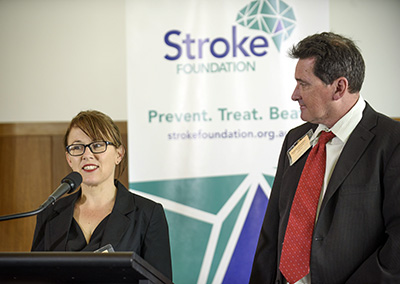
How I became an advocate at the age of 36 By Tracy Ward

Today our local abc journalist asked me if I would describe myself as “an advocate for better stroke treatment services in rural areas”? I answered her with a resounding Yes! I have now been an advocate for my husband Stephen for almost seven years and an advocate for the Stroke Foundation for close to five years.
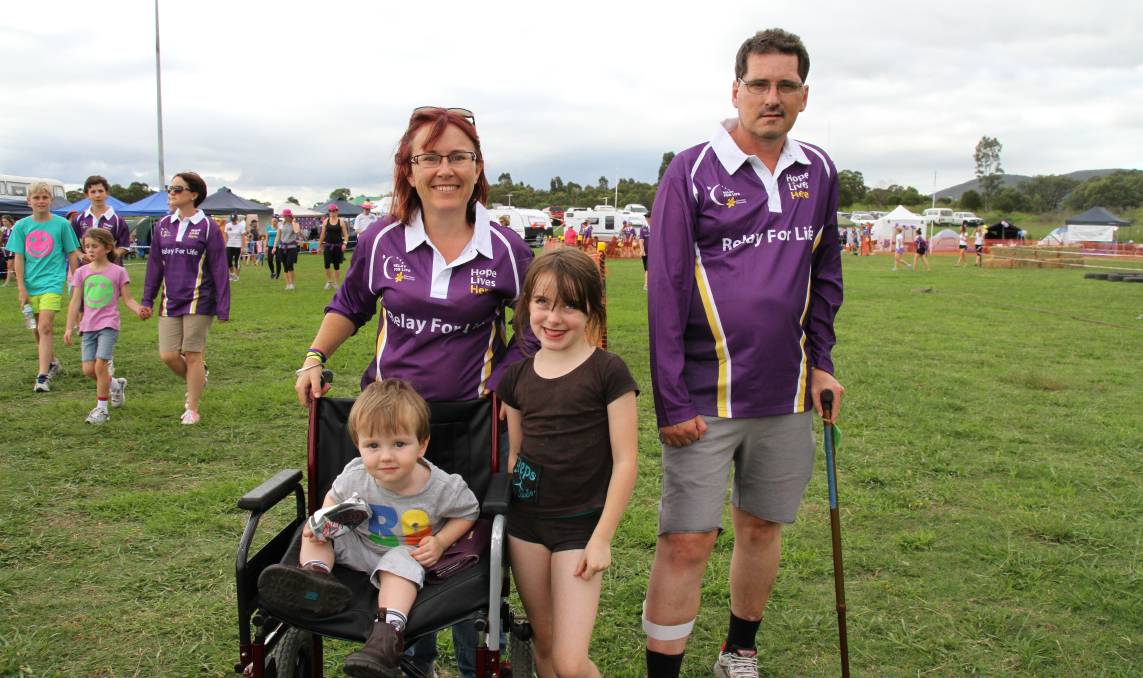
Let me give you a bit of background so you understand where I am coming from and what put this fire in my belly.
My darling husband Stephen had a stroke at our home in Denman New South Wales at the age of 48. It took 25 minutes for the ambulance to arrive at our house and one of the paramedics attending didn’t think Stephen was having a stroke. Instead of arranging for the Westpac Helicopter to come and retrieve him from our house in Denman, he was transported by ambulance with no lights or sirens to Muswellbrook District Hospital, a small hospital with no stroke unit.
We were lucky that the doctor was in the hospital when we came in via ambulance because that isn’t always guaranteed at Muswellbrook. He recognised immediately that Stephen had suffered a stroke and used teleconferencing to connect to John Hunter Hospital, the home of one of New South Wales best stroke units. We had a helicopter on the way and we should have been at John Hunter within 2 hours of Stephen’s stroke. The helicopter got diverted to a motorcycle accident and it took approximately 6 hours for Stephen to get to the stroke unit.
The year was 2013, the best stroke treatment back then was tPa a blood thinner. It can be lifesaving and disability preventing if your stroke has been caused by a clot (an ischemic stroke) but fatal if your stroke has been caused by a bleed, (a haemorrhagic stroke). The only way to know what sort of stroke someone is having is a CT scan.
CT Scans aren’t available in Muswellbrook on weekends. Stephen had to wait until he could get to John Hunter Hospital to find out what sort of stroke he was having. I was aware we had to get Stephen to John Hunter within 3 hours and as we sat there waiting for the helicopter I could feel that time slipping away, panicking, knowing that we needed to hurry up.
When the helicopter arrived and Stephen got loaded in, I felt a sense of relief because he was on his way to the Stroke Unit but worried because I had realised that we were outside the window for treatment all the while hoping I had it wrong and we actually had more time than 3 hours.
While Stephen was being transported down to John Hunter in the helicopter my best friend drove me back home to Denman to organise our children (Emily who was almost 7 and Patrick who was 18 months old) and so I could pack a bag for me. She drove me to John Hunter Hospital because I was in no state to drive. It took an hour and a half to get there. I often reflect that I could have got Stephen down to John Hunter quicker than our health transport system could get him there.
“I acknowledge readily that it would not have been safe for me to do so as Stephen was lapsing in and out of consciousness but it still makes me crazy mad that we couldn’t get Stephen to John Hunter quickly.”
From the time he had his stroke, it took approximately 6 hours for Stephen to get to John Hunter. Because it took so long, Stephen did not get the tPa, the clot did not get dissolved, his brain swelled. He ended up having emergency surgery to remove part of his skull so that his brain could swell safely. This was just the beginning of life threatening moments for Stephen over the course of the next couple of weeks. The ICU specialist asked me how long it took us to get to hospital after the second life threatening moment. He shook his head and said “It’s just too long”.
I remember asking him how he thought we could have got there quicker. He didn’t have an answer.
This is still the fire in my belly. It shouldn’t have taken 6 hours for us to get from Denman to John Hunter Hospital. In my eyes, there were three failures. The first was the paramedic not recognising the signs of stroke in a younger person. Stephen’s face had only drooped minimally but he was completely paralysed down his right side and he could not speak at all. So the message of FAST that the Stroke Foundation has spent years communicating hadn’t got through to the paramedic. The second failure was the lack of an extra helicopter. The Westpac Rescue Helicopter services a massive area and at the time of Stephen’s stroke there was only one helicopter servicing that area. These days there are two.
The third thing that I recognise as a failure of the system was the lack of a CT scan before he got to John Hunter Hospital, the neurosurgeons could have been preparing his treatment to commence as soon as he got there instead of having to do all the tests first. The lack of CT machine at Muswellbrook Hospital is still an issue. We are still lobbying our local politicians to get this changed and we have been told it is on the list for the 3rd stage of the redevelopment of Muswellbrook Hospital which hasn’t received funding yet but we will keep reminding everyone that can do anything to change this that it hasn’t happened yet.
I have always been politically aware and active. But if you aren’t, it doesn’t mean you can’t be an advocate.
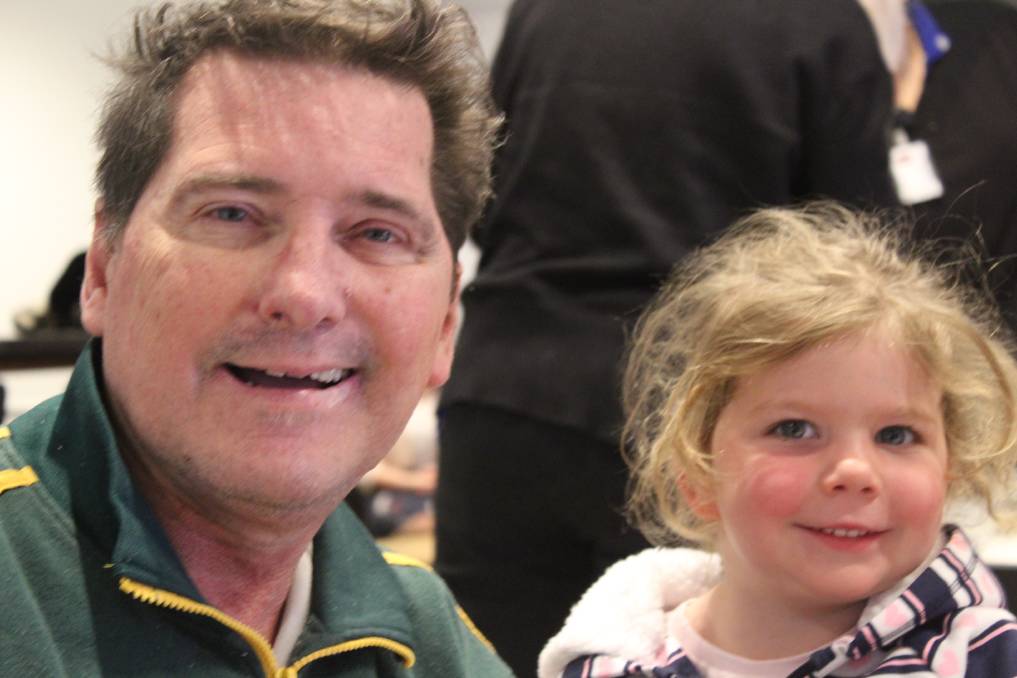
What is an advocate? The dictionary says this “A person who publicly supports or recommends a particular cause or policy” OR “A person who puts a case on someone else’s behalf”
I learned very quickly to become Stephen’s advocate. I was 36 years old and a reasonably confident young woman but not incredibly so. I think in the early days I faked it a bit because I didn’t want anyone to see how scared I was about our future.
When the ICU specialist told me he didn’t think Stephen would survive and started listing all of the disabilities that Stephen would have if he did survive and that he would probably need to be put into a nursing home, I felt like he may have been asking me to withdraw treatment. Instead I remember looking at that doctor and telling him to just keep Stephen alive and let me deal with afterwards.
I look back now and recognise that I was indeed advocating for Stephen, my husband, my intelligent civil engineer who loves politics and the Manly Sea Eagles. He isn’t just any person, he is MY person and he was going to have all of my support.
The second time I remember advocating for Stephen in that hospital setting was when I told every nurse, doctor and allied health person that I wanted Stephen to come home with us, his family. So instead of looking into nursing homes for us, the allied health staff worked with Stephen until he got enough function back to enter rehab. 5 more grueling months of rehab lay ahead of us and at the end of it, I’m sure there were still staff that believed we wouldn’t make it and that I would end up putting Stephen in a nursing home.
Getting home was hard work but being home in rural Australia meant that accessing services was even harder. The NDIS hadn’t rolled out yet, so it was really hard to come by therapists and it was very expensive. I remember apart from not being able to access speech therapy easily which we really needed because Stephen was left with severe aphasia after his stroke, Stephen also had something weird going on with his eyes. Neurologists couldn’t help because Stephen couldn’t describe what was happening.
The first contact I ever had with the Stroke Foundation after we got home was reaching out to them to see if anyone else had a loved one with an issue with their eyes. The lovely Di posted my message and asked people to help me. We got help and our optometrist organised for us to see an ophthalmologist who now sees Stephen regularly for Botox. It changed our lives and immediately Stephen’s rehab improved.
A few months later the Stroke Foundation put out a media call out for people who had poor outcomes with their strokes because of delays in treatment time. Remember that fire in my belly? It ROARED! I sent the Stroke Foundation our story and was soon contacted to ask if we would talk about our experience on television program The Project! National television! We jumped at the chance in the hope that it would change things for other families like us in the future.
Appearing on The Project highlighted the plight of stroke survivors living in rural areas but we needed to get in front of the people that can change things.
Our politicians. Confession time? I’m a member of a political party. One of the big two. Not the one that’s in power at the moment on a federal level. I have a very good relationship with our local federal member and I often get in contact with him if there is something that I need help with. He and his office were a Godsend when NDIS finally rolled out here.
I can hear a lot of you rolling your eyes now and saying things like “I could never talk to a politician about stroke or carers or the NDIS etc etc.” But guess what? Their job is to help us with government issues.
So when the Stroke Foundation asked us to come to Parliament House to address the Health Minister, the Honourable Greg Hunt MP, I said yes. I thought we would be just sitting down having a chat with him but no, we were going to talk about our experience to a whole lot of people and he would be in the audience. There were even more TV cameras! We made the 5 pm news! I told them all about the delay in getting Stephen to the stroke unit and we lit a tiny spark in the Health Minister. That tiny spark has just turned into a funded telestroke program for New South Wales. It is rolling out across the state as we speak! It is so exciting and will be a game changer for other families like ours in the future.
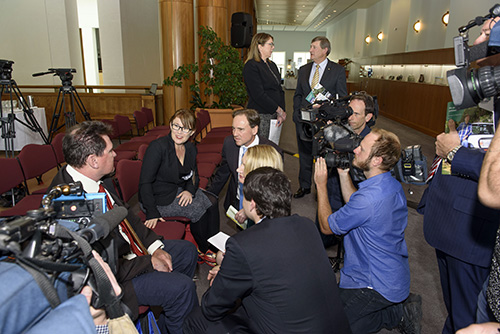
You know what else I found out that day? That Greg Hunt is a really lovely man. Really. Politicians are humans just like us. It helps if they can be made to feel your story. If they hear your story and it sticks with them, it can change policies, it can change laws, it can get things to happen.
Since that day in Canberra, before every election, Stephen and I make an appointment to see our local member and other candidates in our seat. I give the Stroke Foundation a call and they send me a list of issues we need to get heard to improve the state of stroke in our Country.
The other thing that we have done is made friends with our local newspaper and radio journalists so when something exciting comes up in the Stroke world (like today’s Telehealth announcement) or during Stroke week, we have a friend we can contact who will help us get our story out there and spread the word about stroke.
So the take home message about advocacy? Whether you’re a survivor or a carer of a survivor, you need to tell your story so that others learn about stroke. So that people recognise the signs of stroke in loved ones, workmates, strangers and know that stroke is a medical emergency and needs an ambulance not a lie down. To make sure that no stroke is left untreated. You can start small, share a Stroke Foundation post on Facebook with your friends, you could write a letter to your local paper educating readers about the signs of stroke. Or if you have aphasia and you have trouble writing letters, get a loved one to help you.
Advocacy is not scary, it gives you a really great feeling afterwards and can bring about some amazing changes in our country. Imagine if your letter to a politician turned into a meeting with them, which lit a tiny spark in their brain that then turned into an amazing game changer for any one who ever suffers a stroke ever again?
You could do that. We all can do that and we all must do it together because no one else knows all the trials and tribulations of stroke in this country like we do. The survivors and their carers.