Move the Hips, and Your Brain will Follow

After some exploration, he found the most useful tools for him were swimming, music and mindfulness meditation, as well as psychotherapy and computer-based brain training. He documented his recovery in a book How I Rescued My Brain, released in 2014.
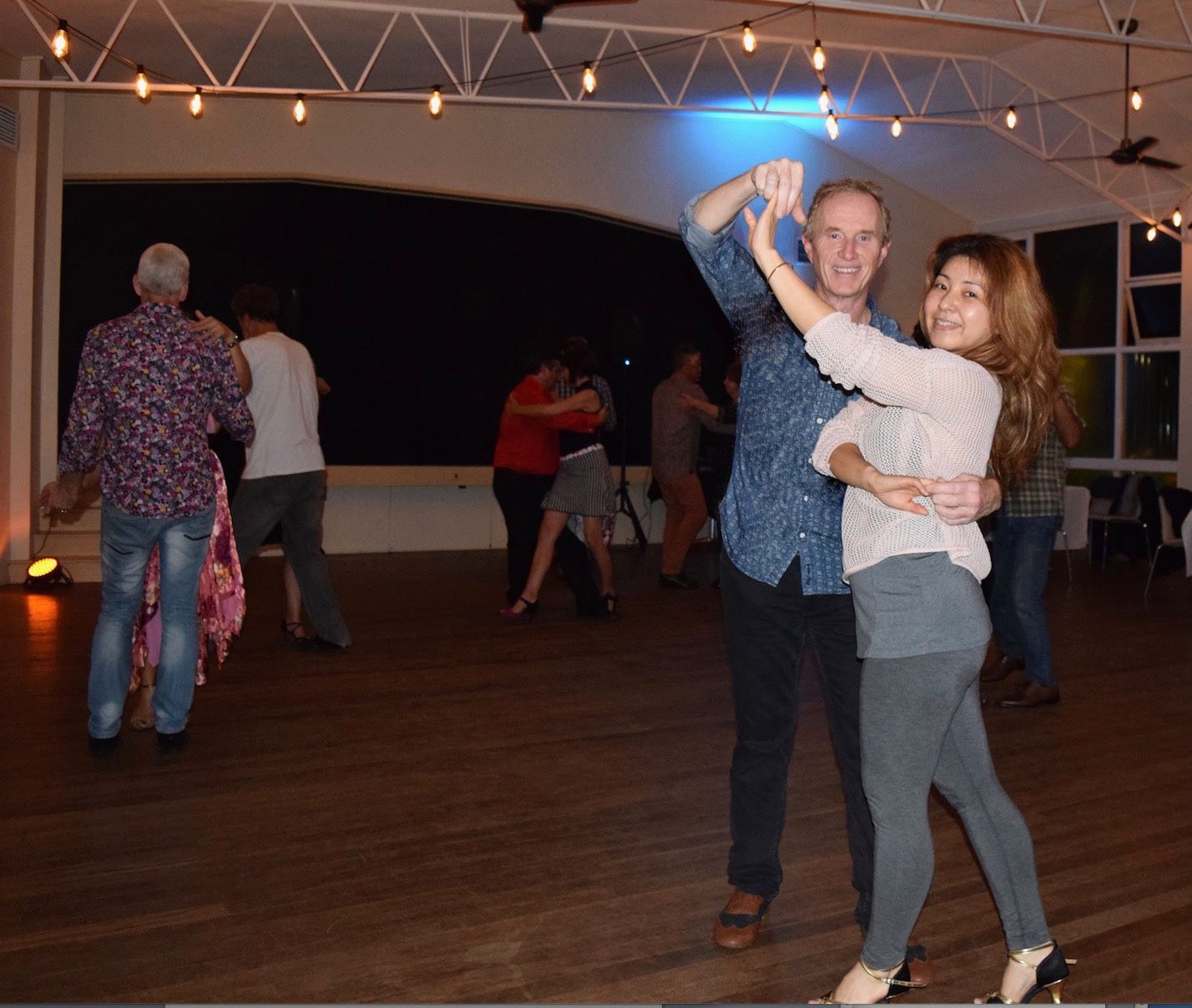
These days, he’s found yet another way of activating his brain: dance. “It feels like another healing activity,” he explained from one of his regular haunts, a popular Bangalow coffee shop.
In the late 1970s and early 1980s, David was lead singer in the Ryebuck Bush Band, also playing guitar, banjo and mandolin. Somehow a lot of traditional bush dancing was also involved. In the early 2000s, having moved to Bangalow, he attended salsa classes with his former wife, Leah, but having three girls and a busy family and professional life, left no time for dance.
Today, eight years after the stroke, he’s “still improving”. Once again he’s writing and performing his songs in The Smashed Avocadoes with Nick Repin and Dan Ewald, and is working on another book. And, after camping at the Woodford Folk Festival two years ago, he’s dancing again. “I went to a Scottish ceilidh and felt this lovely joy of moving to the music.”
A friend referred him to the weekly salsa classes held at the Bangalow Bowlo by the Byron Latin Dance Collective. At first, travelling the country doing book publicity, he couldn’t attend classes consistently, but the following year he could.
These days, he attends weekly classes and the monthly dance party and workshops. “In Latin dance, the man traditionally leads, so you have to remember the moves. It’s a combination of physical and mental fitness.” It is not a solo practice. “You meet new people, and have permission to hold someone, to laugh and to chat.”
So to him, how is dance different from, say, swimming or meditation? “It seems to process emotions in a different way, not a heady way. You’re challenged to lose your self-consciousness. It uses multiple levels of the brain, so helpful for brain recovery. It’s a ‘team effort’, incorporating physical mobility, a sense of rhythm, sequencing, emotion (responding to the music) and there’s a strong social component too. You have to read the body language of your partner and synchronise.”
“As well, it increases your aerobic fitness, helps balance and coordination. Finally, it creates social inclusiveness. Dance has its own language, and human touch, which is so healing.”
David explained that things like playing music, learning a new language and dancing all stave off cognitive decline and dementia. “Humans need social connection. Loneliness is a vice of modern society. For me, dance feels like a healing activity which reactivates my brain.”…Christobel Munson Reprinted from the Bangalow Herald, July 2017