Healing with Ngurambang (Country) after stroke

Yiradhu marang!
G’day! My name is Courtney Rubie and I am a Wiradjuri woman living in beautiful Newcastle on Awabakal Country.
At 25 years old, I became a stroke survivor after having suffered a cerebral venous sinus thrombosis and a subarachnoid haemorrhage. Or to put it simply – I had a couple of strokes.
When stroke survivors talk about their journey after stroke, we don’t often hear about how a person’s culture plays a significant role in their recovery. You may have heard the sentiment that for First Nations peoples to feel waluwin (healthy) in their mind, body and spirit, their cultures and the land play a role in their wellbeing. This notion of holistic health is true, especially for First Nations people who have survived stroke. A huge part of what keeps our spirit strong in our post-stroke journey is how we connect to our culture, to our Ngurambang (Country) and who we connect with in our community.
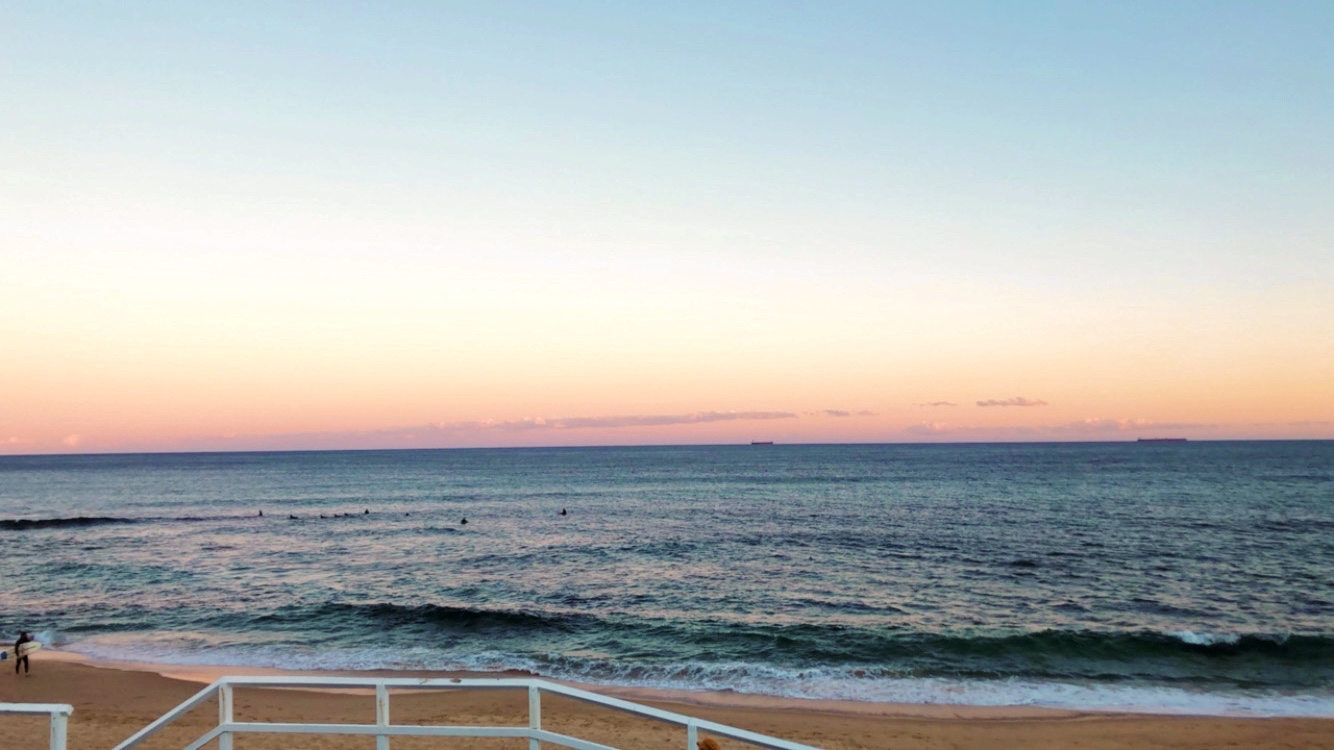
Awabakal Country is special to me – I have such a strong connection to the gadhang (ocean) here. There is something really powerful in just sitting, watching and listening to the waves crash over. One by one, rolling into the next – blue-green water glistening under the sun. One way that I like to look after my mental health is by taking a drive around the beaches of Newcastle or finding a nice spot to sit or swim at Bar Beach. When I sit at the beach, I think about how special it is knowing that First Nations people have enjoyed the same beauty and energy here for tens of thousands of years before me. In the days after my stroke, I found out that I wasn’t allowed to drive for six months and I was absolutely devastated. But I was mostly worried about how I would get to the places I love. I had to accept that it was time for me to share these special places with others and for them to be seen through my eyes.
Connecting with the Ngurambang (Country) I live on is so important to my physical and mental health. It’s something I’ve developed a greater appreciation for post-stroke. When First Nations people talk about connecting to Country, we are talking about that feeling we get when we consciously tune into where we are and the places that are special to us. This specialness comes from the areas we know to be culturally significant or from the energy places put out. When we connect with special places, we are inspired by the beauty in nature – how big trees stretch up tall and weave their limbs, making homes for many animals, how the birds chirp and sing their songs across vast distances, and how all the colours and textures of the flora and fauna coat the land like an artwork. When you walk on Country, there is an energy that is transferred with every step you take. It is an energy that is invigorating and calming – and within that energy there is healing. For me, the healing lies within the sand of the beach, between the waves of the ocean, on the dirt of the walking tracks, through the songs of the magpies, the uproarious laughter of the kookaburras, and under the bright, warm yiray (sun).
The forced rest that comes with stroke recovery has made me stop and appreciate a slowness that, in the beginning, was so foreign to me. This slowness comes with brain breaks where bare feet on the grass is grounding. The slowness is found in cups of tea in the sun. It’s found within the language of my ancestors that I’ve started to learn. And it’s moulded around the soft life I now live. Everything that underpins this slowness is my culture, the Country I live on and the miyagan (family) and mudyi-galang (friends) who form my community.
The journey of a First Nations stroke survivor is unique and sacred. Amongst all the deep emotions, anxiety, forced resilience and struggle to grasp a new-normal, there is a specialness in our healing that is guided by our ancestors. It comes from the ancestors who live on as our non-human kin on Country. And from ancestors whose wisdom, stories and knowledge live on through the people within our communities. But our healing also comes from Country. Country has always been special to First Nations peoples – since time immemorial. My old people knew how Country would provide them with almost everything they needed in times of healing. And I am in awe of how Country has been there for me, to lift me up when I haven’t been able to do so myself.