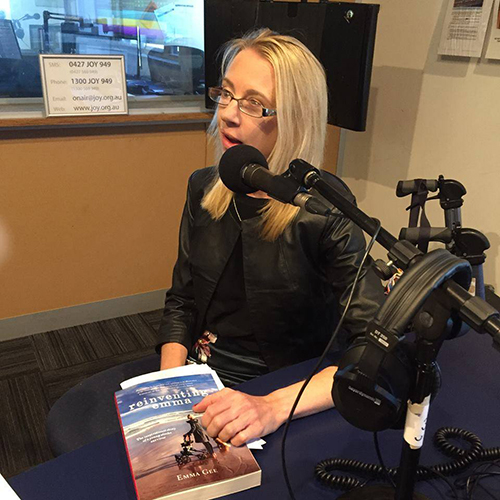
Pain management - experts from Emma Gee's book reinventing Emma

Managing my pain as a stroke survivor is an ongoing battle for me. However, eleven years into my recovery I’ve found a few strategies that help me emotionally and physically manage my pain.
My reflections over the last decade when writing my memoir, Reinventing Emma’ highlighted to me the gradual process for me in managing my pain. This is so different for everyone and so how I manage is likely to vary to you but being mindful of this is very
important. In sharing my strategies, I’m hoping that you will feel less alone and perhaps some of the ways I hope you can try! Here are some extracts from my book, Reinventing Emma’ but my journey is scattered over 31 chapters so I have only shown a glimpse of my pain management here – I’m confident that you’ll gain a lot, whether survivor or carer, from other topics I explore in my book. All the best xxx
From p.129
“Because I was in constant pain I became the guinea pig for every possible pain medication, but none succeeded in touching even the edge of my raw nerve pain. The medications only seemed to produce unpleasant side effects. Some made my dizziness worse, others caused nausea, and then I would be prescribed yet another to mask that side effect. For example, when I became dizzy I was given Maxolon. The intention seemed to be to cover any symptom that would stop me going to therapy”.
From p.178
“Sleep, or lack of it, was an ongoing problem. My pain now peaked at night, disrupting my sleep and then my monkey mind would generate more problems. Will I have another stroke? Will I be able to return to work? Will I ever have kids? Will I be too tired and miss my physio session tomorrow? I’d turn my bedside light on to read, trying to distract myself from the near exploding pain that just seemed to escalate when combined with any worries.
On those sleepless nights I would often rewind my previous day to identify the pain triggers – the culprits. Maybe it was sitting in a hard chair in direct sun at that café? Or was it when I rolled the supermarket trolley over my numb left foot?”
From p. 185
“Instead of waking normally to an alarm, I am once again stirred rudely by the throbbing stiffness and excruciating nerve pain that now invades and pulsates around my body. Strange signals abound, from hand numbness to sharp dagger-like pains in my head or big toe, and cramping in my left hip and calf.
A year ago, one of the many pain specialists said that I had to “acknowledge these crazy symptoms but not let them stop what you do.” Easy for him to say”.
But he was right. If I worried about every sign my body gave me, I’d go insane. After trialing a pharmacy full of pills to rid me of my nerve pain, I had chosen to stop taking pain medication. The tablets didn’t seem to lessen my pain and just exacerbated my other problems, like my balance. By now I knew that moving my body helped, so I would choose to start my monotonous day of rehab early.
From p.191
I was slowly beginning to see the domino effect that the intense rehab was having on my other deficits. While I could walk with a stick now, it triggered my left arm nerve pain, led to sleepless nights and heightened my fatigue, fear and frustration. As a very active person in my former life, I hated that I couldn’t perform at the same level.
From p.224
“Approximately three years after my stroke my pain peaked and started to significantly hinder my life. I investigated a new procedure called deep brain stimulation. It involved further brain surgery to rewire the nerves. The surgeon was confident in carrying out the procedure, but there was no evidence that it would reduce my pain as, to date, it had only been used on patients with Parkinson’s disease. This seemed too much of a risk. I felt stuck and helpless.
Although I had a job, the cost of seeking opinions was immense and wasn’t getting rid of my disability."
From p.231
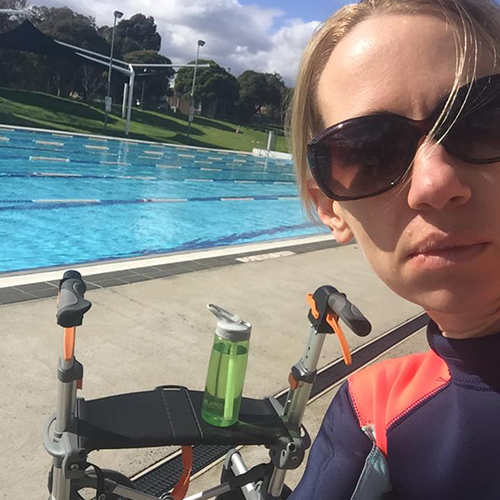
“Swimming is my pain medication, and my anti-depressant. After years attempting to completely cure and rid myself of my nerve pain, I have finally accepted its presence. Rather than let its undeviating existence control me, I’ve become an observer of it. By acknowledging it, I’ve learnt to make room for it and try to distance it from my daily life. After religiously jotting down daily pain patterns for months in a diary, I have become aware of what triggers and exacerbates my pain. If I have niggling pain or am feeling flat or sluggish, I enter the water and imagine the negativity leaving my body like osmosis.
Likewise, if my pain worsens I visualise kicking it out. I emerge from the pool feeling refreshed, refueled and ready to tackle my day”.
These are merely a few excerpts but hopefully provide you all with a snippet of how I’ve managed with my pain overtime. Once a full time occupational therapist, becoming a patient and trying the pain strategies I’d previously prescribed on myself has given me such an incredible insight. I reflect on how I’ve dealt with my pain and see that I had to go through so many different phases, experience life as a person with raging pain to know what works.
Trialing numerous strategies both were helpful and me aware of what didn't work for me – how ‘my’ body responded.
Reinventing Emma is available in Paperback and eBook format at
www.emma-gee.com/-the-book/ Listen to Emma talking about pain management in our enableme podcast here.