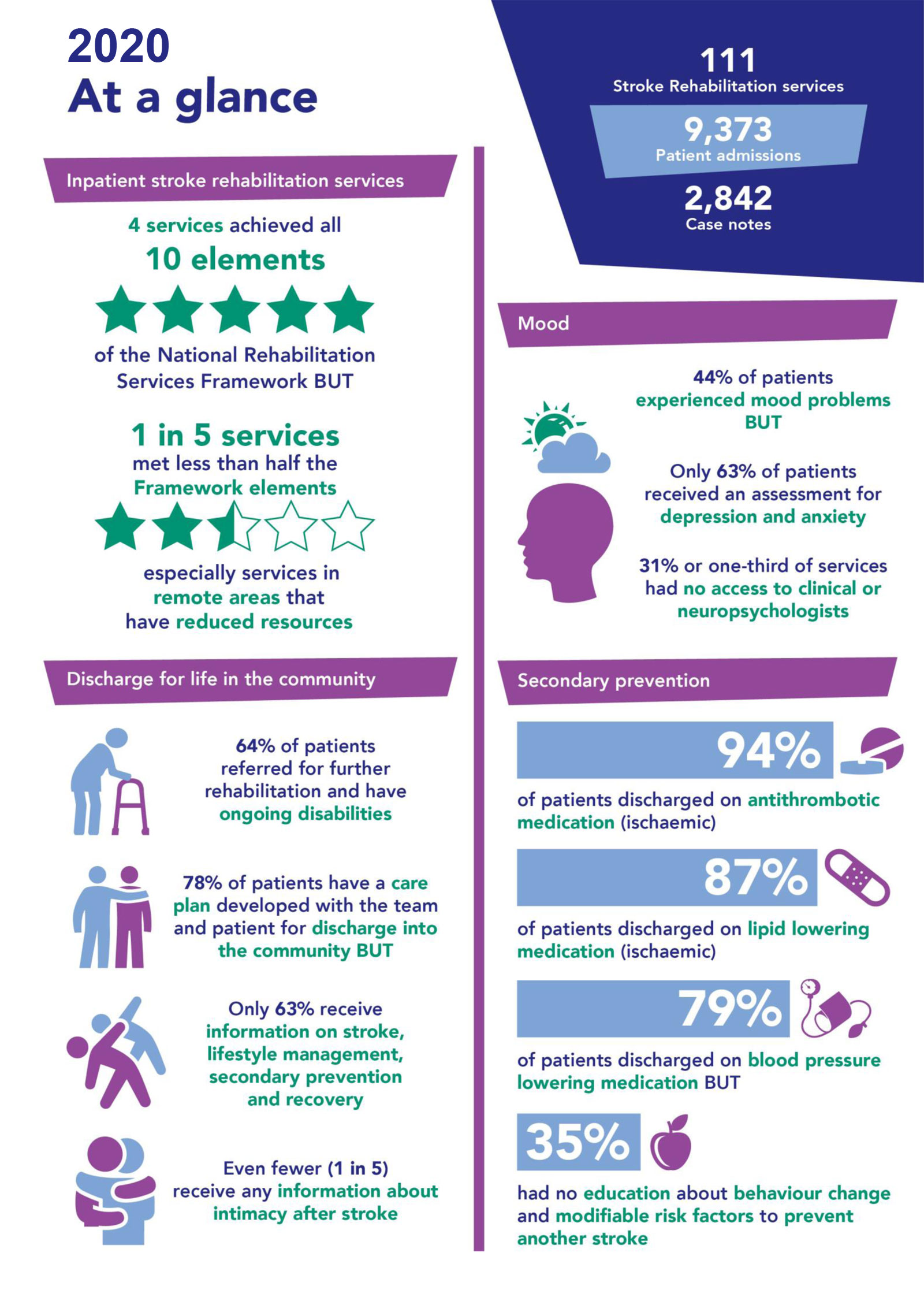
Here are some responses from the Facebook community:
Leanne
So true mental health should be a ongoing part of the rehab process. I will not go into too much detail other to say someone very close to me had a stroke at 17 and is still struggling with impact. Unfortunately 8 years down the track using coping mechanisms detrimental to their health. Family asked for cognitive-behavioural support - answer did not fit the criteria ie - stroke did not do enough damage to qualify. Neuropsychologist was only interested in assessing ability to make own decisions
Jo
Unfortunately so true and this has been the path for my partner. The mental health struggles post stroke have had a far more significant impact than the initial stroke. We received no education around the potential for mental health illness. We need to start treating the whole person including their mental health. Women are screened for perinatal mental health during pregnancy and during the postnatal period. The risk of depression and anxiety for perinatal women is less than that post stroke. It’s time it was addressed for all those affected by stroke. As a consumer, I would be very happy to support these changes going forward. Thank you for highlighting this.
George
We kind of sorted out the very acute stroke pathway with telehealth involvement in decision on thrombolysis, clot retrieval, as well as management of hemorrhage. Is telehealth a potential solution to bring the psychologists to the disadvantageous rural area?
Tracy
If aphasia is included a neuropsychologist will often say “can’t be tested due to language impairment “. This has to get better. If 1/3 of stroke survivors have some form of aphasia, then surely the neuropsychology community are bright enough to develop a non language based test. And this is where Telehealth might fall down. A therapist may miss non verbal cues or not be able to see drawing/writing.
Katie
I was seen by a normal psychologist and not referred to a psychiatrist as needed or a neuropsychologist, 12 years and the damage is still trying to be fixed, at least stroke is now getting better funding and support, thanks to the great work of the stroke foundation 👍
Suzana
It is appalling how stroke survivors are treated 💔...after the second stroke I demanded help from hospital for my depression, finally saw neuropsychologist....they tested my cognitive abilities post stroke only....no one talked to me....haven’t tried again...never will.....I do not see it getting better for foreseeable future for any stroke survivors......
Kristy
Yep,at 34 my world turned on its head as an outpatient in rehab services the one missing therapy, actual therapy. I had speech, OT, physio even art therapy provided as an outpatient.My relationship at the time failed.I was cleared to work again which was a long hard process relearning 10 years of experience to recover . I wasn't prepared for learning to drive all over again,the loss of my sexuality, hair loss , going from 63kgs to 86kgs in 3 months affecting my self esteem severely,the confusion and frustration in not being able to communicate, permanant nerve damage, how fragile and painful my body felt . I was so strong and fit.I now have epilepsy as a result ,on a lifetime of medication after partial seizures daily and status seizures that landed me in ICU.These are the things people do not see therefore your designated as "all better now" I'm ok now,at 37 I do not remember what its like to wake up and feel healthy. Regardless, I'm enjoying getting another day,and every day is lived with a big smile and putting my own happiness before all else for the first time in my life❤.