Post-hospital support is vital for stroke recovery and too many people are missing out!

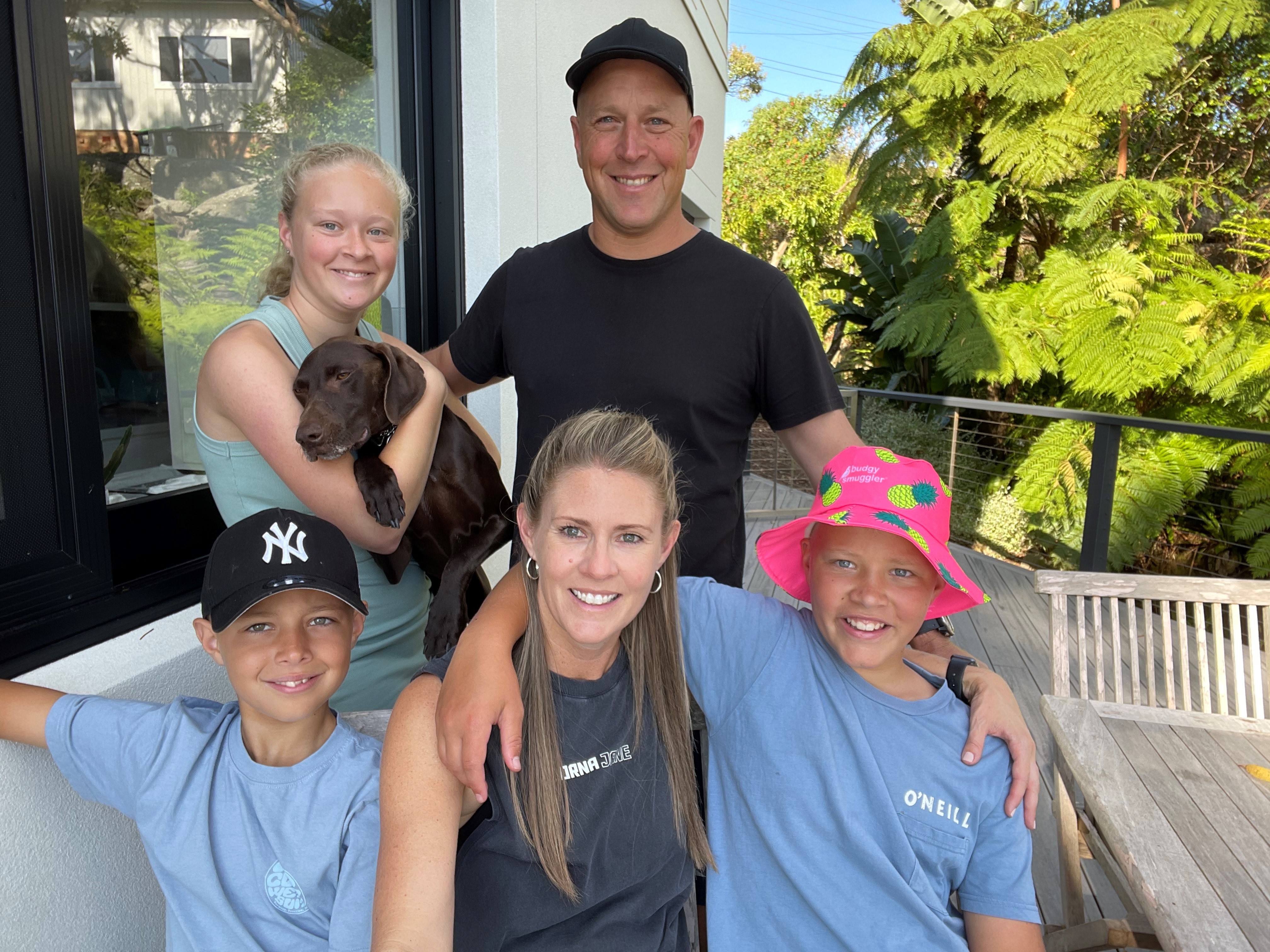
Nyree, is calling on decision makers to ensure other survivors receive the ongoing care and support they need after leaving the hospital.
Mum of three Nyree Hopkins was enjoying a family day at the beach when her stroke struck.
“My husband Michael and our three kids were in the water. My phone rang and I just remember feeling really strange as I went to answer it. The next thing I remember was Michael waking me up,” she said.
It took several trips to the hospital before scans revealed Nyree had experienced two strokes. She has been left with speech and memory issues and had to give up a job she loved.
Like 30 per cent of survivors, Nyree was discharged from hospital and left to navigate the post-hospital system herself.
“We spoke to our GP and did our own research. My husband asked a neurologist where he would send his own wife, and he said the Royal Rehab at Ryde. I was an inpatient there for a month and my care there was the best of the best,” she said.
“I was the youngest person in there by 30 years. They told me, if you don’t use it – you’ll lose it, so I worked very hard through my rehabilitation.
“You need someone to guide you through that. I was lucky I had my youth on my side. If an elderly or isolated person went through the same experience, they may struggle. It shouldn’t be left to the poor person who is recovering from a stroke.”
With Nyree’s help we are calling on the Fed Govt to invest $10m in our StrokeConnect Navigator Program, to provide a consistent equitable national support service to help all Australians access appropriate treatment after a stroke.
You can help too – find out how. (or comment below)
On average 88 survivors of stroke are discharged each day from hospitals across Australia, so this means at least 26 people leave without the resources and support to help them achieve their best possible recovery after stroke.
This is not good enough!