Jo Kyte
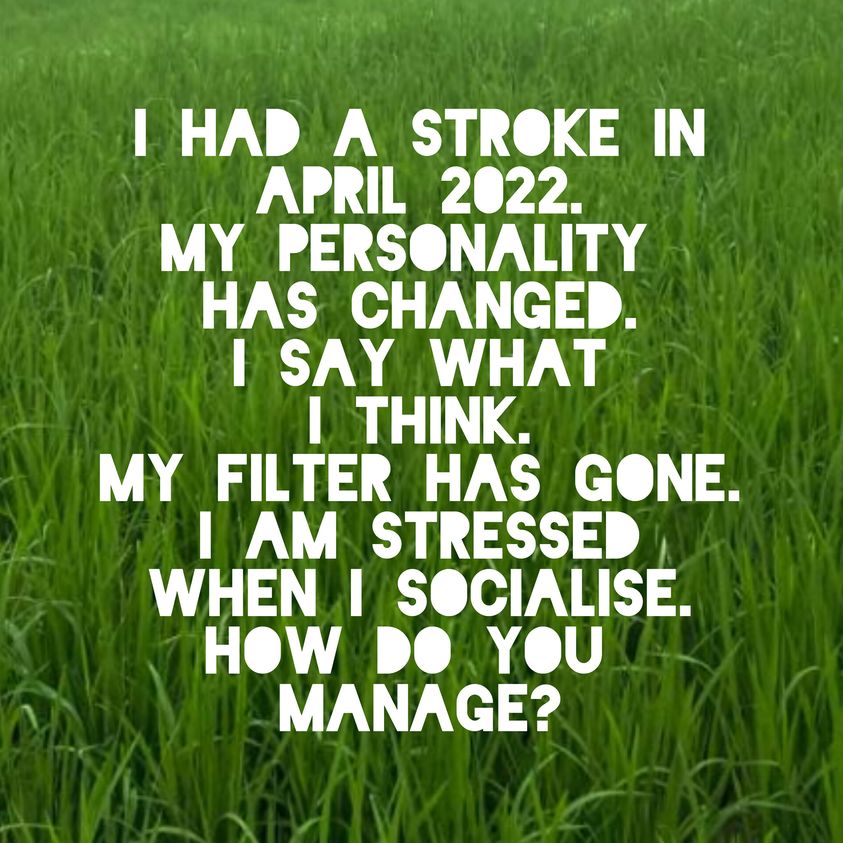
Oh Alex I’m so with you on this, it’s so hard to adjust to the new you, especially when you can still remember the old you and personality, everyone forgets that a brain injury is an invisible one, I wish sometimes you could wear it on your arm so people can see. I feel the best way to deal with this is be honest with everyone and just tell them you may need to walk away or not come or just be there in person but have some quiet time. I fully understand how stressed you feel. Having no filter is also such hard work, I often say things I would never have ever said to people before and often in a way I don’t mean.
Tom Hilton
I have no patience outside of my networks for things iI once did. My advice is keep your catch ups to those who you know well and love/like you for who you are. Whilst you may have changed a little your still the same person you were. Try and surrounding your self with those most dearest. They will understand.
Vicki McGregor
My hubby had a stroke almost 2 years ago - 23 December. His filter was definitely gone but over time he has gotten so much better at controlling that. He still asks me though if he said anything wrong. We are very social and we started with this almost straight away. I almost had to have a roster for people to come visit as we have so many amazing people in our lives who just wanted to see he was ok and genuinely cared about him. Just take things at your own pace and as others have said those that truly love and care for you will accept things the way they are now. It is hard being the onlookers too and they don’t understand what you might be thinking inside your head. If there is no physical disability (in my husbands case), it’s even harder for people to know there is a difference in the way you think and feel. It’s such a hard journey some days but with the support of the ones closest to you, you will be ok. I would have a “look” or I would give him a rub on the arm if I thought my husbands filter was truly coming down. Sometimes I’d just guide the conversation in another direction. All the best and I do hope you can enjoy some time with family and friends. It’s nice to have them around too.
Meri Dimovska
First time is going to suck balls, like big time. Go through the emotions and evaluate it for what you can and can't do for next time.
I was my husband's 'social manager', I'd suss out the setting, work out the escape route to have time out, who will be there and let them know in advance to not approach and over crowd at once. You need to also allow time for your family and friends understand how not to trigger you. My husband's main trigger that he struggled with the most, even today 3 yrs later, is anyone approaching him from behind. Even a slight touch of the shoulder frightened him. I was always on alert with his surroundings, not to protect but to prepare so he could control breathing, talk through feelings and learn to be in difficult situations.
Don't ever stop trying, accept there will be good and bad times but from our experience, things do get easier.
Just remember you are around people that care about you, find your safe place in any settings. You'll end surprising yourself! Good luck.
Wen Henderson
Hi Alex,
I'm the wife and carer, of a 56yr old man, who had a stroke in August 2022. He is going through the same things, I'm trying my hardest to support him and be as understanding as I can, but I wasn't the one who had the stroke. I have been watching some YouTube videos from other stroke survivors to try and get a little understanding or some insight. Try integrating slowly a little at a time, don't put a time frame on it either, just do what you can.
Baby steps.
David Crombie
Just listen to your body and if you get tired or need to rest let people know and don’t feel bad about it. I sometimes struggle with loud environments and just find a quiet place to relax. Enjoy and all the best.