What an exciting avenue- Photography!
I have attached some articles from like minded people who are stroke survivors that have ventured into the exciting world of Photography-
https://themighty.com/2017/08/how-photography-helped-me-adapt-after-a-stroke/
https://visualwilderness.com/fieldwork/pursue-outdoor-photography-disability
https://petapixel.com/2016/11/10/photographer-half-paralyzed-strokes-shes-still-shooting/#:~:text=South%20African%20photographer%20Ursula%20Tocik,left%20side%20of%20her%20body.
TAD Australia (https://tadaustralia.org.au/ ) may also be of interest to you as well. They are an organisation operating in Australia. They consist of a team of skilled volunteers, therapists and engineers who work with you to provide solutions that meet your needs, for example modifications to cameras. They may adapt a readily available product to make it more suitable for you or provide a customized solution designed and built just for you. If you are having difficulty operating your camera this may be something to consider.
Good Luck. If you would like to discuss further, please don't hesitate to call us on StrokeLine 1800 787 653
Warm Regards, Alicia (Occupational Therapist- StrokeLine)
Hello anonymous Shutterbug. If you were a Canon or Pentax person I would ignore you but because you're a Nikon person I feel your pain. The really short version is if you want to take photos you'll find a way.
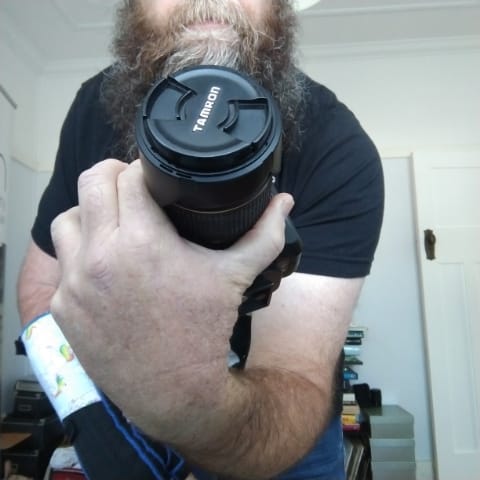
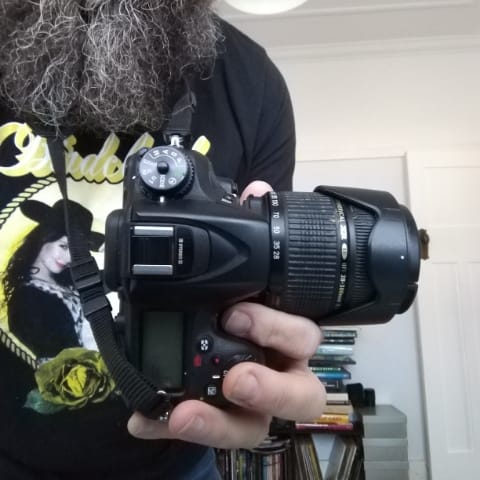
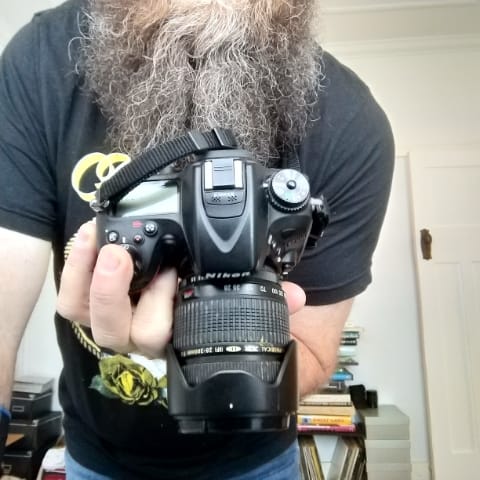
I am right side affected and cameras are made for right handed people. Bit of problem right there and when I had my stroke I was still using film so taking crap photos made for expensive mistakes. Add a pretty useless right hand to vision impairment, I see nothing on my right, and I was making blurry mistakes. I investigated making custom mounts, turning my camera upside down to make it left handed, seeing if anyone made left handed slr's and got a no every time. Technology won't adjust for me so I had to learn how to cradle the body and press the shutter one handed. AND slow down. Because I don't see half of what is in the view finder I needed to stop and make sure I was paying attention to what was in the frame.
Bottom line is it was all doable and the bonus was I was composing better images.
Then when I could afford to move to digital about 6 years ago, cameras are expensive and so is living with a stroke, I had a much heavier, more complex thing, with more buttons to deal with. I had to get Nikon, as you know, because of the mounts. Hello D7100. In the first 12 months with it I took more photos than I had in the previous 4 years. I'm self-taught and was in love because I used to being frugal on film and was instantly taking great photos. Great camera. Some functions need two hands/fingers but you just suck it up and find a way.
My new Nikon is heavier and more complicated than my film Nikon but it gets used because you find a way. THE MOST IMPORTANT thing I can suggest, if you don't already, is always wear the neck strap as dropping cameras is expensive. I'll try and get a picture up here of how I hold my camera and shoot.
I totally understand your frustration but I'll leave you with this. It's better to have your camera with you and not use it than want it and it's at home.
Good luck, happy snaps.
Cheers,
Ade
Hi there,
Here are some more great suggestions from EnableMe and Facebook:
Lauren Fink My husband, Paul Fink has a stroke 6 years ago and this was his mission too! He has a dslr and got a handle that you screw into the bottom of the camera and it has a button that allows you to shoot pictures. Only problem is that you need to have camera in manual mode. Otherwise a tripod is the only way we found that you could be able to take pictures in manual mode. Contact Paul if you want details of the adaptive device he purchased.
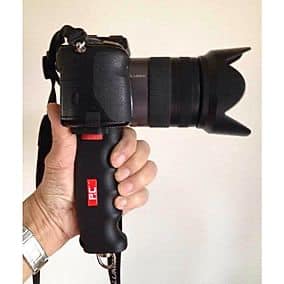
Paul Fink Lauren Fink SLR Cameras are difficult to manage with one hand because the weight, and shutter release is facing other way. My solution was a using pistol grip (and shutter release cable to go with it). It is relatively inexpensive... Otherwise, compact cameras, or tripods. Good luck!!
Ian Peppiatt I had two strokes two weeks apart in 2016, and while not suffering major physical deficits, I do still have times when I’m worried about dropping the camera. I agree with Amanda’s suggestion of using a tripod, but also think about adding an infrared shutter remote control.
I’ve got a Nikon D5500 DSLR, and my remote control was less than $20.
Between the remote and my tripod, my pictures are still reasonably sharp.
Good luck with it, and I hope you get to enjoy photography again.
Brett Williams Where there is a way you can do it just never give up and go remember you can do anything you put your mind to don’t let anyone tell you that you won’t
Amanda Kemp Have you tried using a tripod? Would give you the stability for the camera & then you would only need to press the shutter button?
And also photos of how Adrian (comment above) holds his camera:
I bought a a camera mount from reel keen. And it can hold my big long lenses , you can put it on a chair , or a wheelchair , it’s strong and great value ,while I was at it I bought the fishing rod holder , so one handed can have all the fun spirts back , check out Reel Keen on face book or utube And I’m sure you will be impressed , happy snapping , and tight lines , Jim
Just adding thanks to your question , it stimulated me to connect up my go pro 7 , it’s been in the cupboard as I was afraid of technology, but it’s going great on my chest harness while scooting around in my wheelchair , my good hand can operate it as I go through busy streets recording the big outside world , so when you can’t be with the one you love , love the one your with , My next step is to use the voice commands , Go pro take video , ect , I bet I get some weird looks in town , ha ha , But I hope the go pro understands my Scottish accsent as I would look even more weird arguing with my camera in my wheelchair , Experiment mate , you’ll have so much fun , ,